
Write Your Own Obituary
To write your own obituary is to create a personal record of the life details and memories that matter most to you. It can give the person who may someday prepare the final obituary a caring, useful starting point during an emotional and time-sensitive time.
There is no single right way to tell a life story. Your draft can be a few notes, a detailed outline or a complete narrative—whatever feels most helpful and true to you.
Start your obituary planning

How to write your own obituary
Begin by gathering the facts and memories you would want loved ones to have available. You do not need to make it perfect; a clear draft gives others a meaningful place to begin.
Include the details that tell your story
- Your full name and names you have been known by
- Your date and place of birth
- Parents, siblings, spouse or partner, children and other important family members
- Places you have lived and communities that have mattered to you
- Education, career history, military service if applicable, or volunteer work
- Interests, favorite activities, sports teams, gardening, baking or skills that reflect who you are
- Special friendships, pets or traditions that have been important in your life
- Accomplishments, goals or moments you would like remembered
Include only what feels appropriate to share. An obituary is a selective account of a life, not a requirement to document every experience.
A simple obituary draft outline
If a blank page feels difficult, use these prompts to make notes in your own words:
- Opening: My name is/was ________. I was born on ________ in ________.
- Family and relationships: The people and relationships most important to me are ________.
- Life and work: I lived in ________ and spent meaningful time working, learning or volunteering as ________.
- Interests and character: I enjoyed ________. People may remember me for ________.
- What matters most: I would like my life to be remembered for ________.
Write as much or as little as you wish. Short notes can be just as valuable as polished paragraphs when they preserve information that may otherwise be difficult for others to gather.
Questions to help you begin
Set aside a little quiet time and consider these questions:
- Who might write my obituary?
- Would their version accurately represent my life?
- What important information might otherwise be missing?
- Which relationships, experiences and interests best tell my story?
- What would I still like to accomplish, communicate or make right while I am able?
Your answers are for you. They can become an obituary draft, a guide for loved ones or a private reminder of what matters now.
Keep your draft useful and up to date
Store your draft somewhere trusted and let the appropriate person know where to find it. Consider reviewing it after a move, marriage, birth, new accomplishment or important loss.
A personal draft also gives you room to add context that others may not know. Write with honesty and care, focusing on the relationships, contributions and memories you hope to leave with the people who matter to you.
For additional planning resources, visit QuickFuneral.com.
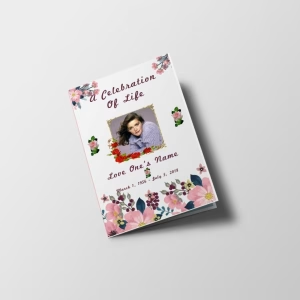
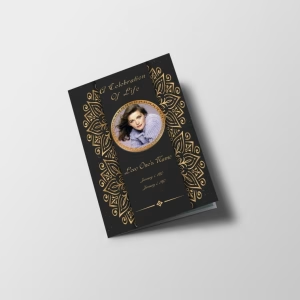
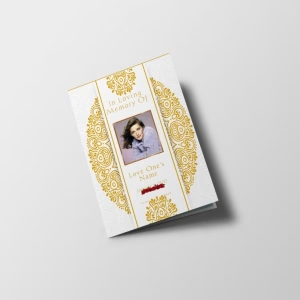
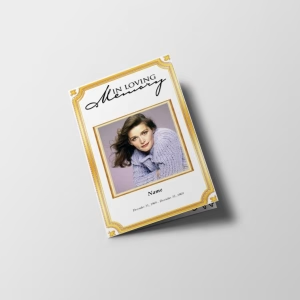
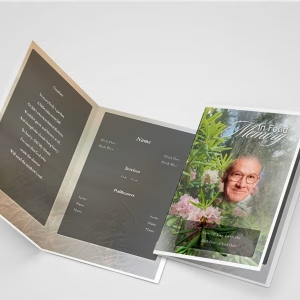
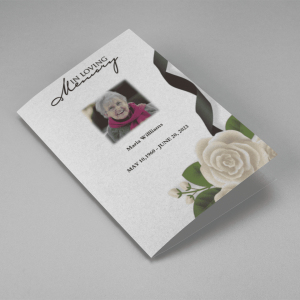
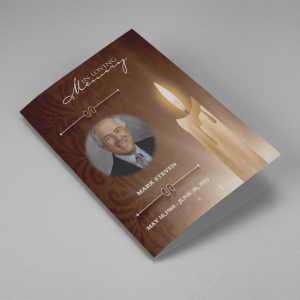
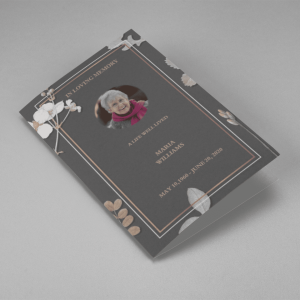
Funeral Program Template
Frequently asked questions
Why write your own obituary?
A personal draft can help preserve details, relationships, interests and accomplishments that your family or friends may not know to include. It can also reduce some of the pressure of gathering information during a difficult time.
What information should I gather first?
Start with basic life details: your name, birth information, family relationships, places lived, work or volunteer history, and the activities or qualities you hope people remember.
Does an obituary need to include every part of a person’s life?
No. An obituary is a selective account of a life. Focus on the facts, relationships and memories that feel important to you and useful to the person who may prepare the final version.
Can I update my obituary draft later?
Yes. Treat it as a living document. Revisit it after significant life events or whenever there is something new you would like recorded.
Who should know where my draft is kept?
Consider telling the person most likely to handle arrangements or write the obituary. Keep the draft in a place that person can access when needed.
Add a review
Your email address will not be published. Required fields are marked *