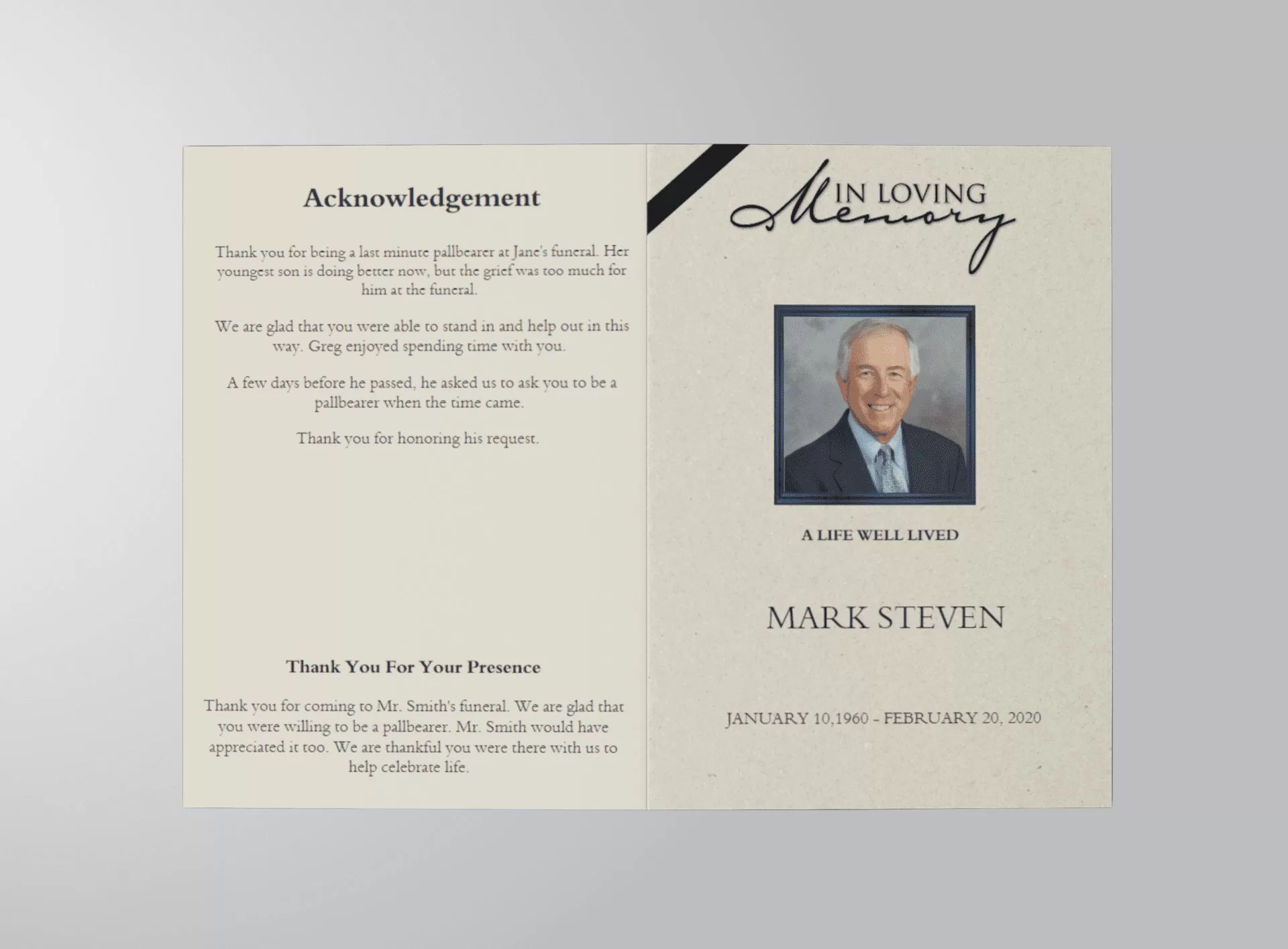
Funeral Program Template Online

Understanding Funeral Planning: A Comprehensive Guide

Example of an obituary for a mother template

What is Funeral Planning?

Funeral planning is a crucial process that involves making arrangements for a loved one’s final farewell. It can be a challenging time filled with emotions, but understanding the essentials can help ease the burden. For those navigating this path, Understanding the Essentials of Funeral Planning provides a foundational overview.

Why is Funeral Planning Important?

  • Provides a structured approach during a difficult time.
  • Helps ensure that the wishes of the deceased are honored.
  • Can alleviate the financial and logistical stresses for family members.

Key Steps in Funeral Planning

When planning a funeral, consider the following steps:

  1. Gather Information: Collect necessary details about the deceased, including personal information and any preferences they may have expressed.
  2. Choose a Funeral Home: Research local funeral homes and assess their services. You can find valuable insights in Navigating the Complexities of Funeral Planning.
  3. Plan the Service: Decide on the type of service, whether traditional or a celebration of life, and consider elements like music, readings, and speakers.
  4. Consider Logistics: Make arrangements for transportation, burial or cremation, and any necessary permits or certificates.
  5. Communicate with Family: Keep family members informed and involved in the planning process, ensuring everyone’s voice is heard.

Funeral Costs and Budgeting

Understanding the costs associated with funerals is essential. Funerals can vary significantly in price, so it’s important to establish a budget. For a detailed breakdown of potential expenses, refer to A Comprehensive Guide to Funeral Planning and Services.

Emotional Support During the Process

Planning a funeral can take an emotional toll. It’s crucial to seek support during this time. Consider reaching out to friends, family, or even support groups. Resources such as Navigating Funeral Planning with Compassion and Care can offer guidance and comfort.

Final Thoughts

While funeral planning can be daunting, knowing what steps to take and where to find resources can alleviate some of the stress. Embrace the process with care and compassion, honoring your loved one’s memory with dignity.

Top Free Funeral Program Templates for Every Service Style

Navigating Funeral Planning with Compassion and Care

Example of an obituary for a mother template

Understanding Funeral Planning

When faced with the loss of a loved one, the responsibility of planning a funeral can weigh heavily on your heart. It is a process filled with emotion, yet it is also an important step in honoring the life of the deceased. In this guide, we will explore the essentials of funeral planning, offering insights to help you navigate this challenging time.

Key Elements of Funeral Planning

  • Choosing the Right Service: Consider what type of service best honors your loved one. Options include traditional funerals, memorial services, and celebrations of life. For a detailed look at how to structure a service, refer to our Order of Service for Celebration of Life.
  • Understanding Costs: Funeral expenses can accumulate quickly. Familiarize yourself with the potential costs involved. Our article on A Comprehensive Guide to Funeral Planning and Services provides a breakdown of what to expect.
  • Selecting a Funeral Home: Research local funeral homes and read reviews. It’s crucial to choose one that aligns with your values and budget.
  • Personalizing the Service: Incorporate personal touches that reflect the personality and values of your loved one. This could include favorite songs, readings, or photographs.

Steps to Efficient Funeral Planning

The process can be overwhelming, but breaking it down into manageable steps can ease the burden:

  1. Gather Information: Start by collecting important documents, such as the deceased’s will, insurance policies, and any pre-arranged funeral plans.
  2. Consult with Family: Discuss your plans with family members. Collaboration can help ensure everyone’s wishes are considered.
  3. Contact a Funeral Director: A professional can guide you through the process, from legal requirements to service arrangements. Learn more about this in our article on Navigating Funeral Planning with Compassion and Care.
  4. Plan the Details: Finalize all details, including location, time, and who will officiate the service.

Grief and Support

Remember that this is a time for grieving. Don’t hesitate to seek support from friends, family, or professional counselors. Many people find solace in grief support groups, which can provide a safe space to share feelings and memories.

Additional Resources

For those who want to dive deeper into the intricacies of funeral planning, consider reading our posts on Understanding the Essentials of Funeral Planning and Navigating the Complexities of Funeral Planning. Both articles are designed to offer comprehensive insights into the process.

Funeral planning is a significant step in the healing journey. By understanding the elements involved and seeking support, you can honor your loved one in a meaningful way.

Back to Top
Product has been added to your cart
Compare (0)