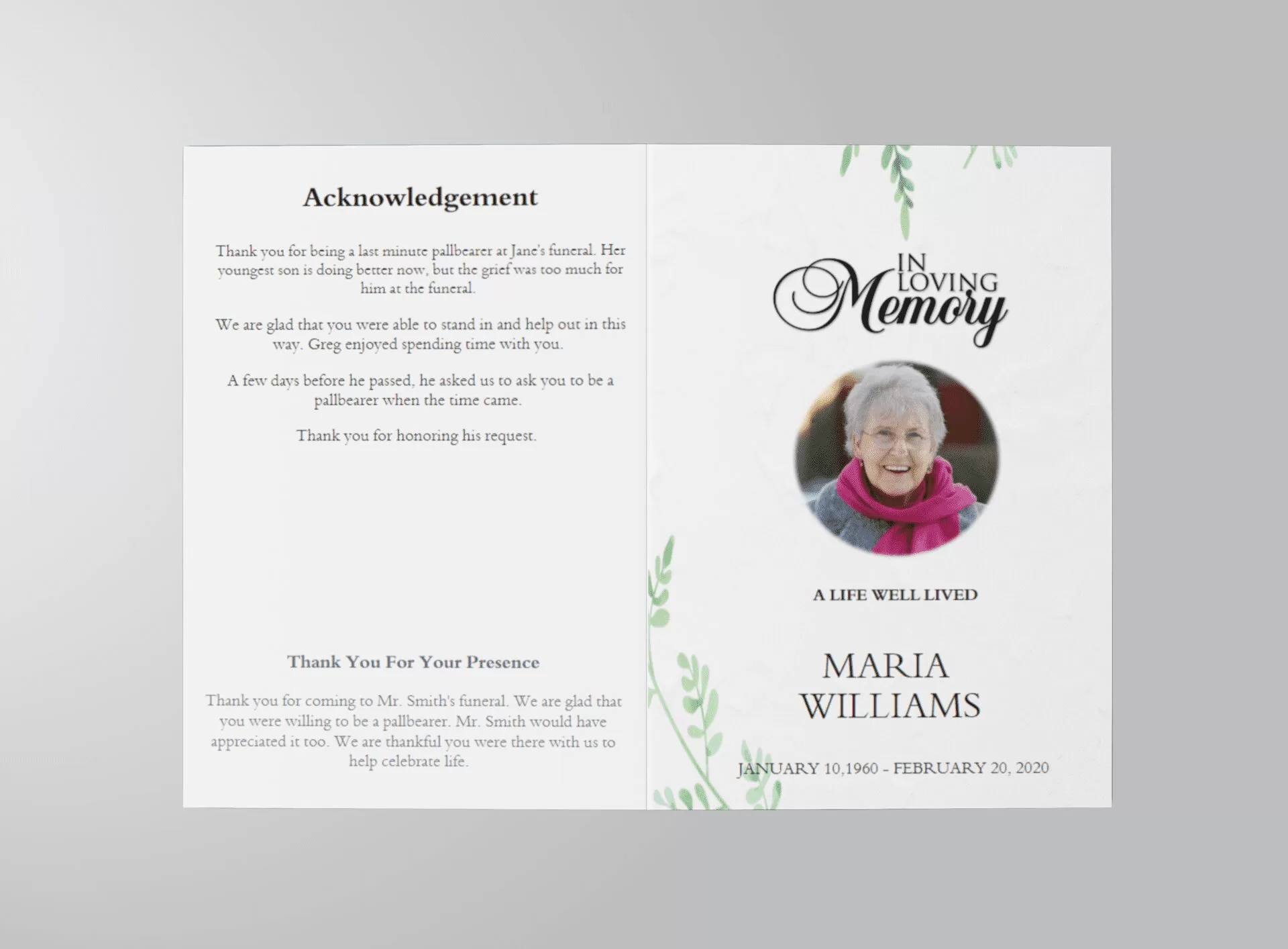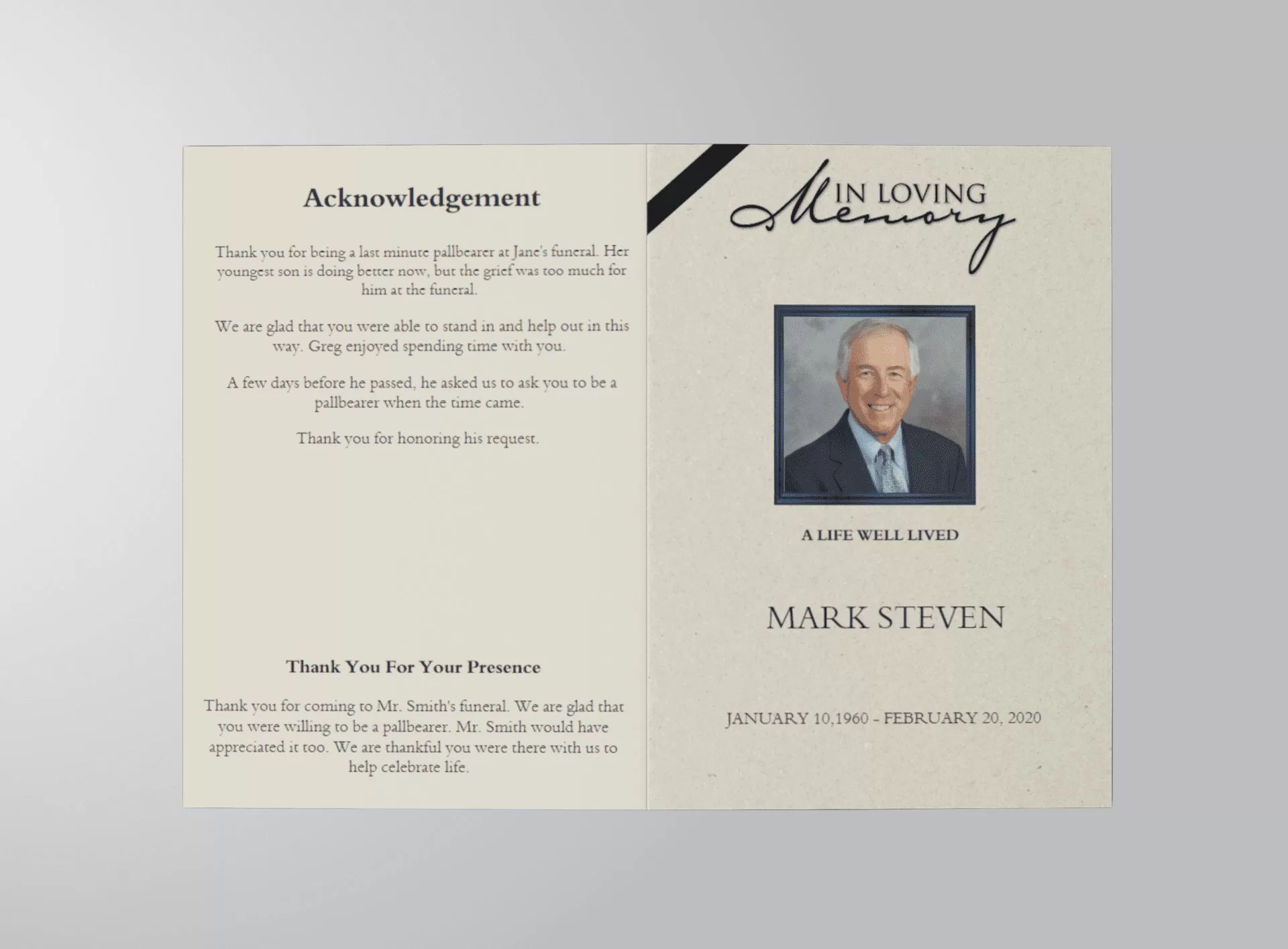
Funeral Program Template Online

Navigating the Emotional Journey of Funeral Planning

Obituary Template

Understanding the Journey of Grief and Loss

When a loved one passes away, the emotional toll can be overwhelming. The mourning process is deeply personal and can vary widely from person to person. It’s important to acknowledge your feelings and allow yourself the time to grieve and heal.

Planning a Funeral: Essential Steps

During this difficult time, planning a funeral may feel daunting. However, a structured approach can help ease some of the burdens. Here are some essential steps to consider:

  • Gather Information: Collect necessary details about your loved one, including personal information and preferences regarding their funeral.
  • Discuss with Family: Involving family members in the planning process can provide support and share the emotional load.
  • Choose a Funeral Home: Research local funeral homes. Reading reviews and understanding their offerings will help you make an informed choice.
  • Consider the Type of Service: Decide whether you want a traditional funeral, memorial service, or a celebration of life.

Understanding Funeral Planning: A Comprehensive Guide

For a deeper understanding of the funeral planning process, our comprehensive guide offers insights into every aspect of planning a funeral, from logistics to emotional considerations.

Finding Comfort in Scripture

Many find solace in spiritual texts during times of grief. Our article on comforting Bible verses provides uplifting passages that may help ease your sorrow and offer peace.

Emotional Support During Planning

It’s essential to seek support while navigating through this emotional journey. Consider connecting with a professional or joining a support group to share your feelings and experiences with others who understand.

Resources for Funeral Planning

Understanding the essentials of funeral planning can greatly help you feel more prepared. Take a look at our article on the essentials of funeral planning for a well-rounded overview of what to expect.

Additionally, our guide on navigating the complexities of funeral planning delves into common challenges and how to overcome them, ensuring you’re not alone in this process.

Importance of Thoughtful Planning

Understanding the importance of funeral planning can help you honor your loved one’s memory while also taking care of yourself. Explore our resource on the significance of thoughtful funeral planning to learn more about this critical process.

A Compassionate Approach to Grief

Above all, remember that grieving is a natural part of life, and there’s no right or wrong way to go through it. Being patient with yourself and allowing the grieving process to unfold is crucial.


Funeral Program Template Online

A Thoughtful Approach to Funeral Planning

Example of an obituary for a mother

Understanding Funeral Planning

Experiencing the loss of a loved one is one of the most profound emotional journeys one can face. During this time, understanding the intricacies of funeral planning is crucial. Planning a funeral can be a daunting task, but with the right information and support, it can also be an opportunity to honor the life of your loved one.

The Importance of Personal Touches

Adding personal touches to a funeral service can help celebrate the unique life of the deceased. Consider these elements:

  • Personalized Obituaries: Share stories and memories that reflect the person’s character.
  • Favorite Music: Incorporate songs that were meaningful to them.
  • Photo Displays: Create a visual tribute using photographs throughout their life.

Incorporating Meaningful Bible Verses

Many find comfort in scripture during difficult times. Popular Bible verses for funerals can provide solace, offer hope, and help guide the service in a spiritual direction.

Steps to Plan a Funeral

When faced with planning a funeral, consider the following steps:

  1. Choose a Funeral Home: Research and select a funeral home that aligns with your needs.
  2. Determine the Type of Service: Decide if you want a traditional service, memorial service, or a celebration of life.
  3. Select a Casket or Urn: Choose an appropriate casket or urn based on your preferences and budget.
  4. Draft the Obituary: Create an obituary that honors your loved one’s life and includes details about the service.

Organizing the Details

Being organized can alleviate some stress during this emotional time. Using a checklist can help you keep track of:

  • Guest List
  • Venue Arrangements
  • Floral Arrangements
  • Transportation Needs

For a more in-depth guide, you might find our comprehensive guide to funeral planning helpful.

Support for Grieving Families

Grief can be overwhelming. It’s essential to seek support from family, friends, or professionals as you navigate this journey. Understanding the emotional journey of loss can help you process your feelings and find ways to cope.

Educational Resources

To empower yourself, consider reading about the essentials of funeral planning. Our article on understanding the essentials of funeral planning provides valuable insights into what to expect and how to prepare.

Planning a funeral is undeniably challenging, but it is also a significant step towards honoring and celebrating a life well-lived. Engage with the resources available to you, and don’t hesitate to lean on your support network during this time.

fall card

Essential Guide to Funeral Planning and Support Resources

Example of an obituary for a mother

Understanding Funeral Planning

Experiencing the loss of a loved one can be one of the most challenging moments in life. The emotional turmoil that accompanies grief often makes the logistics of planning a funeral feel overwhelming. However, understanding the essentials of funeral planning can help ease some of this burden. For an in-depth look at the planning process, consider reading The Essentials of Funeral Planning: A Supportive Guide.

Steps to Consider When Planning a Funeral

  • Choose a Funeral Home: Research local funeral homes and choose one that aligns with your values and budget.
  • Decide on Burial or Cremation: Discuss options with family members to determine what feels right.
  • Plan the Service: Consider the type of service you want, including speakers, music, and readings. For comforting words, explore Comforting Bible Verses for When Someone is Dying.
  • Prepare the Obituary: An obituary is a vital part of notifying others. You can find templates and guidance at our obituary template page.
  • Coordinate with Family: Involve family members in the planning process to honor the deceased’s wishes and foster support.

Exploring Funeral Service Options

Funeral services can range from traditional to contemporary. Depending on the deceased’s wishes, you might consider:

  • Traditional Funeral: Often includes a viewing, service, and burial.
  • Memorial Service: A gathering without the body present, allowing for more flexibility in timing and location.
  • Cremation Services: Options for memorializing the loved one’s ashes in various ways.

For a detailed understanding of various funeral options, read Navigating the Complexities of Funeral Planning.

Key Resources for Support

During this period of grief, having access to supportive resources can be incredibly helpful. Here are some options:

  • Counseling Services: Professional grief counseling can provide a safe space to express emotions.
  • Support Groups: Connecting with others who have experienced similar losses can foster healing.
  • Online Resources: Websites like QuickFuneral offer valuable information on funeral planning and grief support.

For a comprehensive overview of the entire funeral planning process, visit Understanding Funeral Planning: A Comprehensive Guide.

Final Thoughts on Funeral Planning

While planning a funeral can be a daunting task, being organized and informed can significantly reduce stress. Utilize available resources and involve your loved ones in the process. Remember, it’s okay to seek help and lean on others during this time.

sample obituary examples

Understanding Funeral Planning: A Gentle Guide

Example of an Obituary for a Mother

The Importance of Funeral Planning

When faced with the loss of a loved one, the emotional burden can be overwhelming. Effective funeral planning not only honors the deceased but also provides peace of mind to the bereaved. Understanding the significance of this process can help families navigate their grief while making crucial decisions.

Steps to Consider in Funeral Planning

  • Gather Information: Collect vital data about the deceased, including personal details and preferences.
  • Set a Budget: Determine a financial limit to guide your decisions throughout the planning.
  • Choose a Service Type: Decide between burial, cremation, or other memorial services.
  • Select a Funeral Home: Research local options and choose a provider that aligns with your needs.
  • Plan the Details: Arrange for transportation, flowers, and any special services or speakers.

Finding Comfort Through Scripture

During these difficult times, many people seek solace in comforting Bible verses. These verses can provide hope and healing while honoring the memory of the departed. Consider including passages that resonate with the family’s beliefs and values.

Navigating the Emotional Landscape

Understanding the emotional complexities involved in funeral planning is crucial. Grief can manifest in many ways, and it’s important to allow yourself and your family to process these feelings. Seeking support from friends, family, or professional counselors can be beneficial.

Additional Resources for Support

At QuickFuneral, we offer a variety of resources that can assist families during this challenging time. Our comprehensive guide to funeral planning can help simplify the process, ensuring that all necessary details are addressed with care and compassion.

Understanding Funerals and Memorial Services

Many families opt to personalize funerals or memorials to reflect the unique life of their loved ones. Incorporating personal touches, such as favorite songs, photos, or special readings, can create a meaningful tribute. Explore how to navigate the complexities of funeral planning while ensuring that these details are thoughtfully considered.

Conclusion

As you embark on this journey of planning a funeral, remember that you are not alone. Resources and support systems are available to help guide you through this process. Embrace the love and memories of your cherished ones, and allow their legacy to shine through every detail you arrange.

Catholic Funeral Program Example PDF (Free Editable Template)

Navigating the Journey of Grief and Funeral Planning

Example of an obituary for a mother template

Understanding Grief

Experiencing the loss of a loved one is one of the most profound challenges we face in life. Grief manifests in various ways, often leaving us feeling lost and overwhelmed. It’s important to acknowledge these feelings and understand that they are a natural part of the healing process. One way to cope is by finding comfort in comforting Bible verses that resonate with your emotions during this time.

Planning a Funeral with Compassion

When a loved one passes, the responsibility of planning a funeral can feel daunting. It is essential to approach this process with compassion and care. Understanding the intricacies of funeral planning can help ease some of the emotional burdens. For a comprehensive guide on how to navigate this journey, consider reading our article on navigating funeral planning.

Essential Steps in Funeral Planning

  • Gather Information: Collect details about your loved one’s wishes, including burial or cremation preferences.
  • Choose a Funeral Home: Research local funeral homes to find one that aligns with your needs.
  • Plan the Service: Decide on the type of service, speakers, and any special tributes.
  • Budget Considerations: Understand the costs involved and plan accordingly.

Finding Comfort in Traditions

Grieving families often find solace in various traditions that honor their loved ones. These rituals can provide a sense of closure and community support. For insights into comforting traditions that can help during this period, explore our guide on navigating grief.

Utilizing Quotes for Healing

Words have the power to heal. Sharing quotes about loss can provide comfort and foster connection among family and friends. You can find a collection of meaningful quotes in our article when losing a loved one that may resonate with your experience.

Understanding the Importance of Funeral Planning

Funeral planning is essential for honoring the memory of those we’ve lost. It is not merely about logistics; it’s about creating a meaningful farewell. To delve deeper into why funeral planning matters, read our piece on understanding funeral planning.

Conclusion

While this post does not include a formal conclusion, it aims to provide a comprehensive understanding of navigating the journey of grief and the essential aspects of funeral planning. The emotional weight of losing a loved one is profound, but with the right resources and support, it can be a pathway to healing.

funeral program template

Navigating Funeral Planning with Compassion and Care

Example of an obituary for a mother

Understanding Funeral Planning

When a loved one passes, the journey of planning a funeral can feel overwhelming. The emotional landscape is often fraught with grief and stress, making it crucial to have a well-structured plan in place. At QuickFuneral LLC, we believe in providing resources that help you navigate this difficult time with compassion.

The Importance of Thoughtful Funeral Planning

Having a thoughtful plan can ease the burden on family members during an already challenging time. You can explore our article on the importance of thoughtful funeral planning to understand how a structured approach can bring peace of mind.

Key Steps in Funeral Planning

  • Choosing the Right Service: Whether it’s a burial or cremation, selecting the type of service is one of the first important decisions.
  • Location: Decide on a venue that holds significance for your loved one and family.
  • Budgeting: Understanding costs associated with the funeral can help avoid financial stress later.
  • Personalization: Personal touches such as music, readings, or displays can make the service more meaningful.

Emotional Aspects of Planning

Funeral planning is not just about logistics; it’s also about honoring the memory of the deceased while coping with your own grief. Our guide on navigating the emotional landscape of funeral planning delves deeper into coping strategies and emotional support.

Funeral Planning Resources

We offer a variety of resources to assist you during this time. From understanding the essentials of funeral planning to providing a compassionate approach, our articles are designed to support you:

Comforting Words for the Grieving

During times of loss, many find solace in comforting words. Our article on comforting Bible verses for families in mourning provides thoughtful selections to help navigate feelings of sorrow.

Final Considerations

As you embark on planning a funeral, remember that it’s okay to seek help. Surround yourself with supportive friends and family, and don’t hesitate to reach out for professional guidance when needed. With the right resources and support, you can create a meaningful tribute that honors your loved one while also caring for your own emotional well-being.

funeral program template

Navigating Grief: A Comprehensive Guide to Funeral Planning

Example of an obituary for a mother template

Understanding Funeral Planning

When faced with the loss of a loved one, the emotional burden can be overwhelming. However, navigating the logistics of funeral planning does not have to add to your grief. With the right information and support, you can create a meaningful farewell that honors the memory of your loved one.

Why is Funeral Planning Important?

Funeral planning is essential because it allows families to commemorate their loved ones in a personalized way. It also helps alleviate some of the stress during a difficult time. Understanding the importance of funeral planning can provide clarity in a chaotic moment.

Key Steps in Funeral Planning

  1. Decide on the Type of Service: Consider whether you want a traditional burial, cremation, or a celebration of life. Each option has its own implications and costs.
  2. Select a Funeral Home: Research local funeral homes and their services. Look for reviews or ask for recommendations from friends or family.
  3. Plan the Details: Choose music, readings, and speakers for the service. Personal touches can make a significant impact.
  4. Budgeting: Be aware of the costs associated with each decision. It’s wise to create a budget to avoid unexpected expenses.

Support and Resources

It’s important to seek support during this time. Consider reaching out to friends or family for help. Additionally, you can refer to our Essential Guide to Funeral Planning for more detailed resources.

Finding Comfort in Scripture

During moments of grief, many find peace in spiritual texts. Comforting Bible verses for mourners can provide solace and encouragement as you navigate through this challenging time.

Thoughtful Funeral Planning

If you’re unsure where to start, our guide to thoughtful funeral planning offers a structured approach that can help ease the decision-making process.

Compassionate Guidance

Planning a funeral requires compassion and care, not only for your loved one but for yourself and your family. Our resource on navigating funeral planning with compassion provides valuable insights into making the process more manageable.

Conclusion

While we do not provide a formal conclusion, we hope this guide serves as a helpful resource as you navigate the complexities of funeral planning. Remember, you are not alone, and there are many resources available to support you during this time.

Back to Top
Product has been added to your cart
Compare (0)