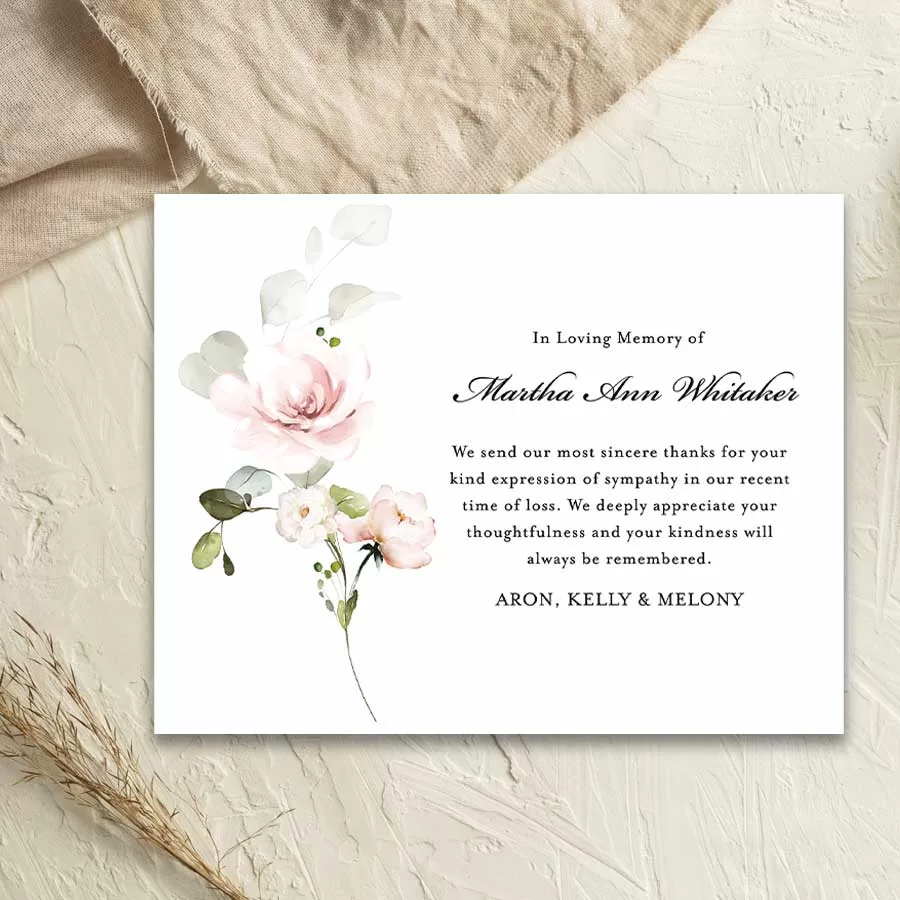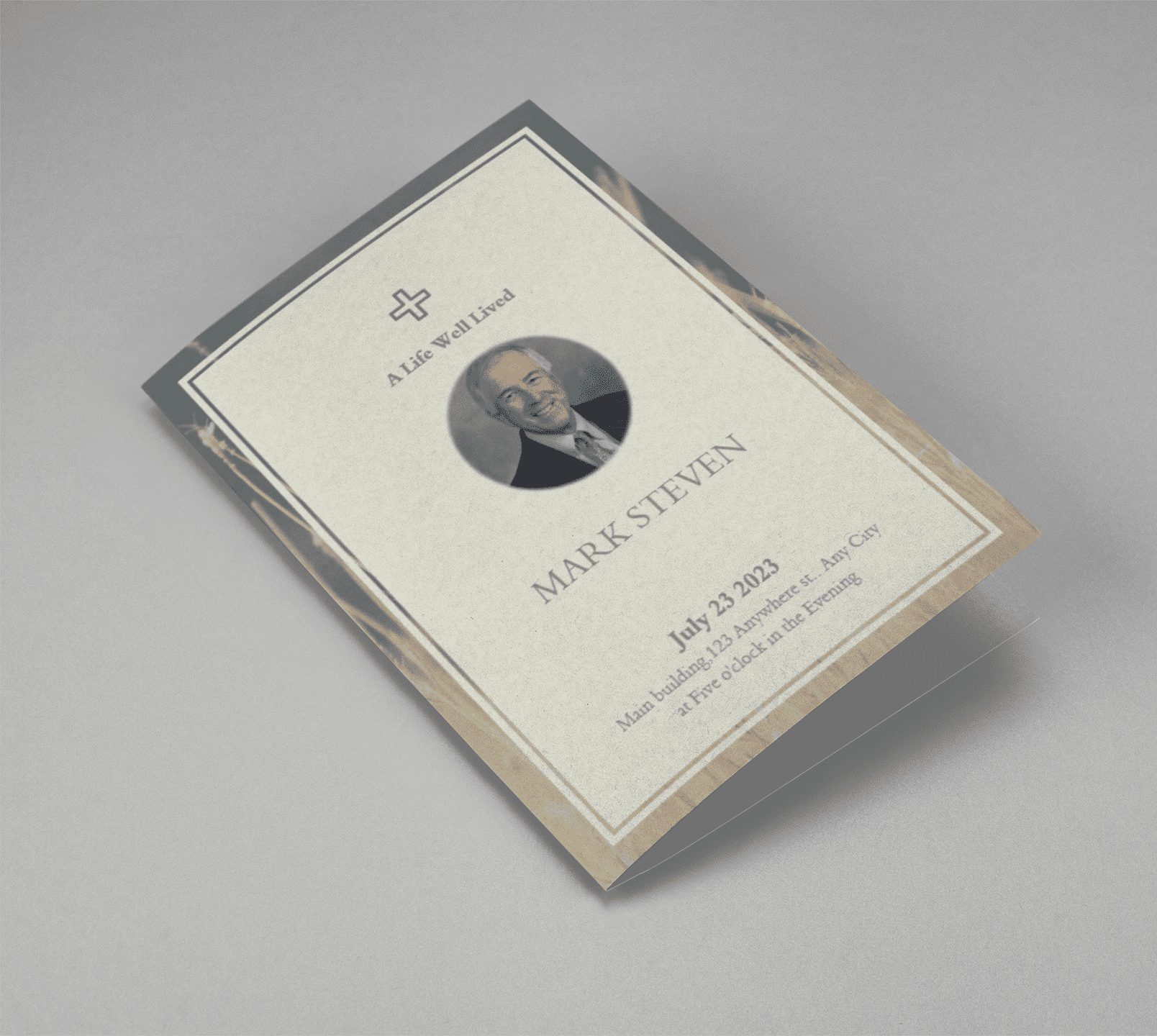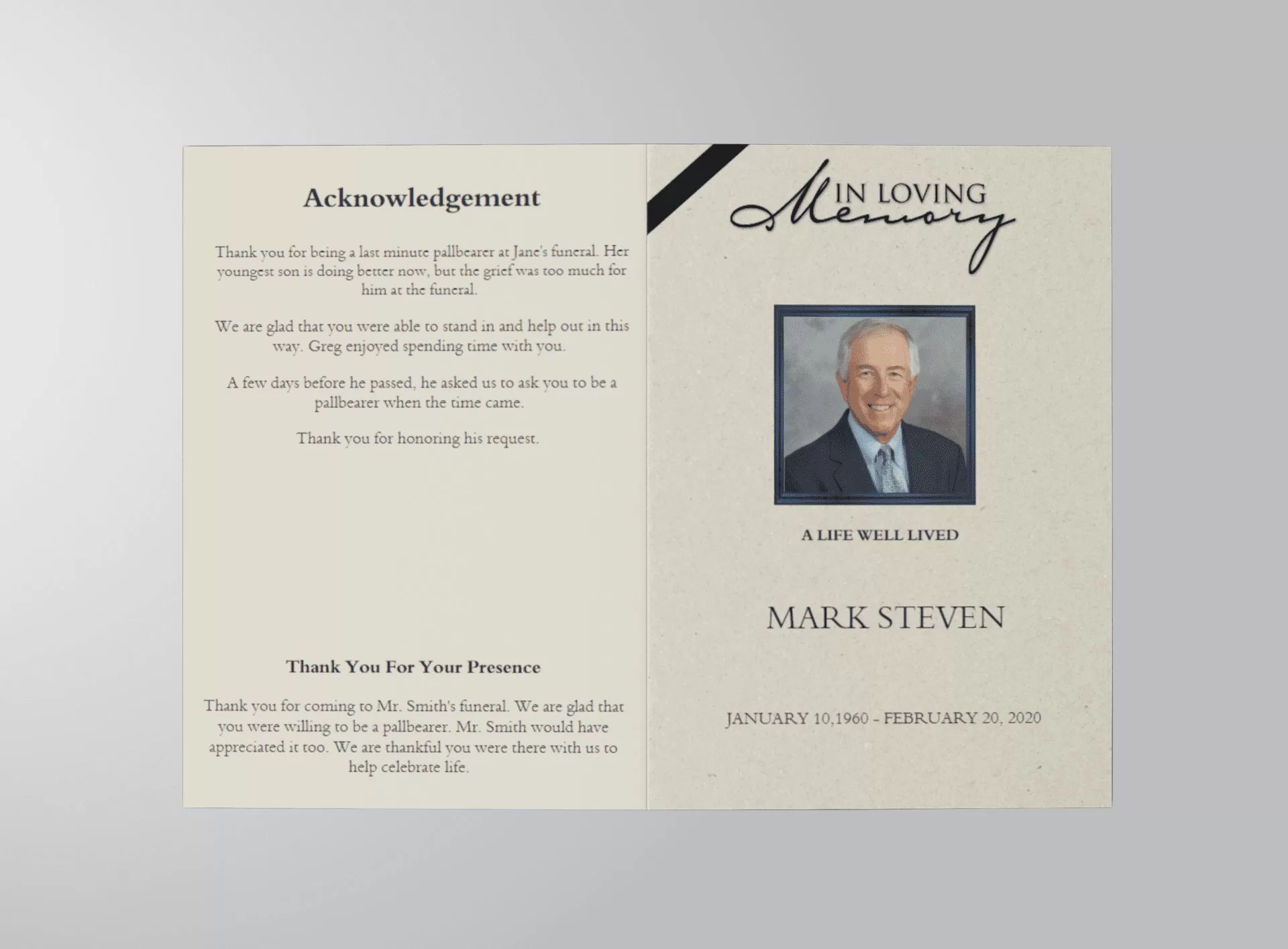
Funeral Program Template Online

The Comprehensive Guide to Funeral Planning

Example of an obituary for a mother template

Understanding Funeral Planning

When facing the loss of a loved one, the emotional weight can be overwhelming. Planning a funeral is an essential step in honoring their life and providing a meaningful farewell for family and friends. In this guide, we’ll explore the importance of funeral planning, the steps involved, and resources available to support you through this challenging time.

The Importance of Funeral Planning

Funeral planning is not just about the logistics; it’s about ensuring that the wishes of your loved one are respected and that the process is as smooth as possible for those left behind. Here are several key reasons why funeral planning is vital:

  • Emotional Support: Having a plan in place can alleviate some of the stress during a difficult time, allowing family members to focus on grieving and healing.
  • Financial Considerations: Planning ahead can help manage costs and prevent unexpected expenses. Learn more about this in our article on the importance of funeral planning.
  • Personalization: A well-thought-out funeral can reflect the personality and wishes of the deceased, creating a more meaningful experience for attendees.

Steps to Effective Funeral Planning

Planning a funeral involves several important steps, which can be simplified by breaking them down:

  1. Gather Information: Collect necessary documents and details about the deceased, such as their personal wishes, financial arrangements, and any prepaid funeral plans.
  2. Choose a Funeral Home: Select a reputable funeral home that aligns with your needs. They can guide you through the planning process and offer various services.
  3. Discuss Preferences: Engage family members in discussions about the type of service, burial or cremation preferences, and any specific rituals that should be included.
  4. Budget Planning: Establish a budget for the funeral to help manage costs. For further guidance, check our essential guide to funeral planning.
  5. Plan the Service: Decide on details like the location, readings, music, and speakers to personalize the service.
  6. Notify Loved Ones: Inform friends and family about the arrangements, allowing them to participate in the grieving process.

Resources for Grieving Families

During this difficult time, utilizing available resources can provide comfort and support.

Final Thoughts

While planning a funeral can feel daunting, breaking it down into manageable steps can help. Remember that you are not alone during this time, and resources are available to assist you in honoring your loved one’s life.
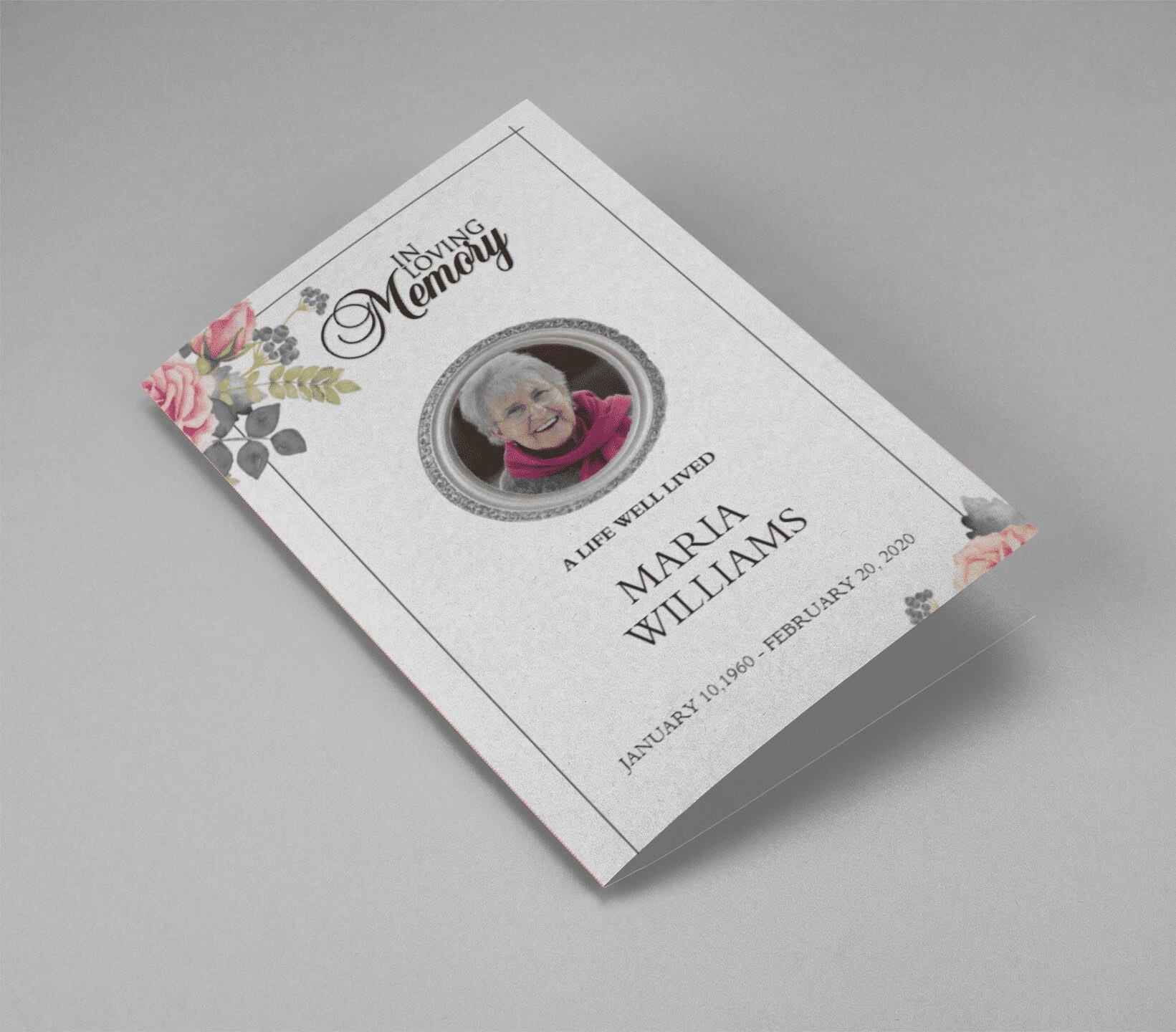
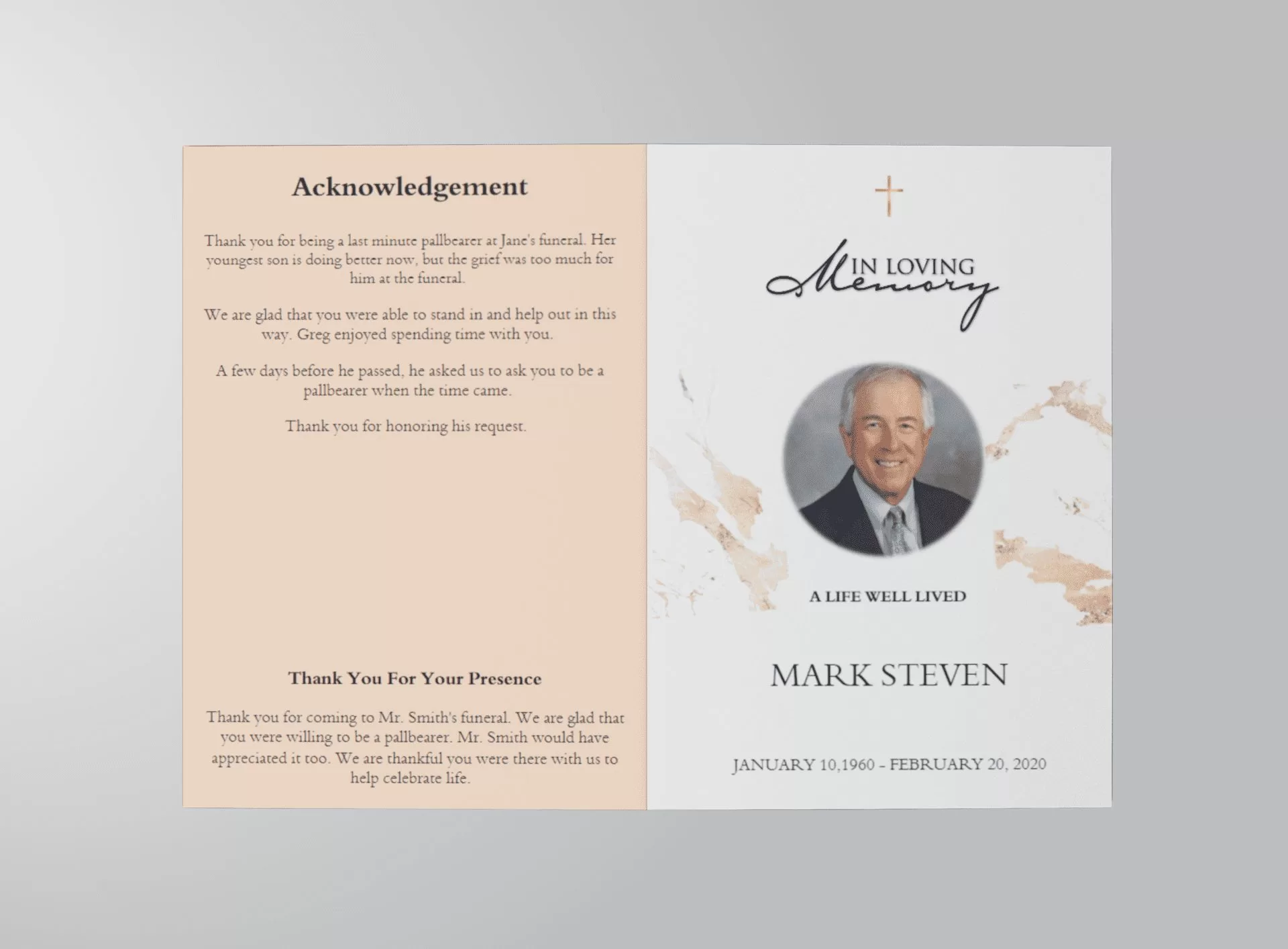
Top Free Funeral Program Templates for Every Service Style

Navigating Funeral Planning with Compassion and Care

Example of an Obituary for a Mother

Understanding the Importance of Funeral Planning

Experiencing the loss of a loved one is a profoundly emotional experience. It’s a time filled with grief and remembrance, but it’s also a time that requires practical decisions regarding funeral arrangements. Navigating this process can be overwhelming, but it doesn’t have to be. With the right resources and support, you can approach funeral planning with compassion and care.

What is Funeral Planning?

Funeral planning involves making arrangements for the care and disposition of a deceased person’s body. This can include choosing burial or cremation options, selecting a casket or urn, planning the service, and more. Here are some key aspects to consider:

  • Burial vs. Cremation: Understanding the differences and implications of each option is crucial.
  • Service Type: Decide whether you want a traditional service, a memorial, or a celebration of life.
  • Location: Consider where the service will be held—at a funeral home, church, or another venue.
  • Personal Touch: Incorporate elements that reflect the personality and beliefs of the deceased.

Essential Insights into Funeral Planning

To help you navigate this journey, it’s important to gather all the necessary information. For a deeper dive into the essentials of funeral planning, check out our article on Essential Insights into Funeral Planning.

Finding Comfort During Bereavement

During such challenging times, it can be helpful to seek comfort through various means, including spiritual guidance. Our collection of Comforting Scriptures for Bereavement and Healing can provide solace and support.

Planning with Compassion

When planning a funeral, compassion should be at the forefront. Understanding the emotional weight of this process can help you make more thoughtful decisions. For practical tips on navigating this journey, visit our guide on Navigating Funeral Planning with Compassion.

Common Challenges in Funeral Planning

It’s normal to face challenges while planning a funeral. Some common obstacles include:

  • Conflicting family opinions on arrangements
  • Budget constraints and financial considerations
  • Emotional stress and grief impacting decision-making

Being aware of these challenges can help you prepare and find solutions that honor your loved one while also taking care of yourself.

Additional Resources

For those seeking a comprehensive understanding of the funeral planning process, our Comprehensive Guide to Understanding Funeral Planning offers valuable insights and tips to ensure a respectful and meaningful farewell.

Conclusion

While this guide provides an overview of the funeral planning process, remember that every family’s needs are unique. It’s important to take your time, seek support, and make decisions that feel right for you and your loved ones.

How to Write a Funeral Program Obituary

Understanding the Essentials of Funeral Planning

Example of an obituary for a mother

Funeral Planning: A Comprehensive Overview

When faced with the loss of a loved one, the task of planning a funeral can feel overwhelming. It is an emotional time, and the decisions to be made can seem daunting. However, understanding the essentials of funeral planning can ease the burden and allow families to honor their loved ones meaningfully.

Key Considerations in Funeral Planning

  • Understanding Your Options: Familiarize yourself with the different types of funerals available, such as traditional burials, cremations, or memorial services. Each option offers unique ways to celebrate life.
  • Budgeting: Establishing a budget early can help guide your decisions. Funerals can vary significantly in cost, so knowing your limits can prevent financial stress.
  • Choosing a Location: The venue for the service is crucial. Consider if you prefer a church, funeral home, or a more personal setting like a family home or a park.
  • Personal Touches: Incorporating personal elements, such as favorite songs, photos, or videos, can make the service more meaningful.

Resources for Support

During this challenging time, seeking support can be beneficial. Consider exploring compassionate resources that can guide you through the process. Professional guidance can help ensure that your loved one’s wishes are honored while providing emotional support to the family.

Incorporating Meaningful Tributes

Tributes play a significant role in remembering a loved one. Many families choose to include comforting Bible poems during the service. These verses can offer solace and reflect the faith and values of the deceased.

Planning Checklist

To make the process smoother, here’s a quick checklist to help you stay organized:

  1. Gather important documents (death certificate, insurance information).
  2. Contact a funeral home or service provider.
  3. Choose a burial or cremation site.
  4. Plan the service details, including readings, music, and speakers.
  5. Notify family and friends about the arrangements.

Final Thoughts on Funeral Planning

While the process of planning a funeral can be challenging, it is also an opportunity to celebrate a life well-lived. Embrace the support available to you, whether through family, friends, or professional services. If you are looking for a more detailed guide, check out our comprehensive guide to funeral planning to further assist you in this journey.

condolences, condolence message, sympathy message, bereavement, loss of loved one, message of support, funeral message, grieving, comfort words, heartfelt condolences

Condolences Message – Tips, Examples, and Free Templates

Condolences Message – Tips, Examples, and Free Templates

Sending a condolences message is one of the most thoughtful ways to express sympathy and support after someone has experienced a loss. A few sincere words can offer immense comfort, helping those grieving feel acknowledged and supported. In this post, we share expert tips, examples, and free templates to help you convey your message with warmth and clarity.

What Is a Condolences Message?

A condolences message is a written or spoken expression of sympathy sent to someone who has lost a loved one. It may be sent via card, text, letter, email, or spoken during a conversation or ceremony. A good message acknowledges the loss and offers comfort without being overly formal or emotional.

Benefits of Sending a Condolences Message

  • ✔️ Provides emotional comfort
  • ✔️ Reinforces bonds of friendship or family
  • ✔️ Honours the memory of the departed

Tips for Writing a Condolences Message

  1. Be sincere: Write from the heart and avoid clichés.
  2. Offer support: Include a line offering help if appropriate.
  3. Be brief: A few honest lines are more powerful than a long paragraph.
  4. Use appropriate tone: Respect the relationship and setting.

Examples of Condolences Messages

  • “My thoughts are with you. I’m so sorry for your loss.”
  • “Wishing you peace and strength in this difficult time.”
  • “May you find comfort in the love that surrounds you.”

Free Condolences Message Templates

We’ve created free downloadable condolences message templates you can use for emails, sympathy cards, or funeral guest books. These templates are editable and ready to personalize for your specific situation.

Download Free Condolences Message Templates »

When to Send a Condolences Message

It is best to send your message within the first few days of learning about the loss. You may also follow up later with a longer message, a call, or a visit, depending on your relationship.

Conclusion

Taking a moment to write a condolences message is a meaningful way to show you care. Whether you’re writing a note for a friend, colleague, or distant relative, our tips and templates can help you strike the right tone with sensitivity and warmth.

Looking for more templates? Visit our Free Condolences Templates resource page.

Memorial father figurines

The Best Obituary Templates

When a loved one passes away, finding the right words to express your feelings can be a challenge. Whether you’re planning a memorial or writing a tribute, using the right obituary layout or sympathy card message can make a big difference in how you honor their memory.

At Quick Funeral, we offer a wide range of sample obituary layouts and templates for obituaries that help you create meaningful tributes. Additionally, we understand how important it is to offer comfort to grieving family and friends. That’s why we provide heartfelt sympathy card messages to help you express your condolences with care and sincerity.

1. Sample Obituary Layouts

Creating a well-structured obituary is crucial for conveying the legacy of your loved one. If you’re not sure where to start, sample obituary layouts can provide you with inspiration and guidance. These examples show different ways to format your obituary, ensuring you include all essential information like birth and death dates, accomplishments, and personal details.

If you’re looking for more creative options, explore these sample obituary layouts that offer unique ways to honor someone’s life.

2. Templates for Obituary

Using a template for obituary can save time and reduce stress during a difficult time. Our collection includes various templates that cater to different styles and preferences, from traditional formats to more modern designs. These templates are easy to customize, ensuring your tribute perfectly reflects the life of your loved one.

For even more options, check out these templates for obituaries, which offer diverse layouts and suggestions for personalization.

3. Sample Obituaries

If you’re unsure about the tone or structure of an obituary, reading through sample obituaries can give you a better idea. Whether you want a formal or casual tribute, our sample obituaries can help you find the right words to say goodbye. From heartfelt messages to more traditional phrasing, you’ll find a variety of styles to suit your needs.

Looking for more inspiration? Check out these sample obituaries that can guide you in writing a meaningful obituary for your loved one.

4. Sympathy Card Messages

In addition to obituary writing, expressing sympathy through sympathy card messages is an important part of the grieving process. Finding the right words for a sympathy card can be challenging, but our curated list offers sincere and thoughtful messages that convey your condolences in a compassionate way.

For more ideas, check out these sympathy card messages, which can help you express your feelings to those mourning a loss.

5. Father Figurines: A Tribute to a Loved One

If you’re looking for a special way to honor a father figure, consider using father figurines as a meaningful keepsake. These beautiful, hand-crafted figurines serve as a heartfelt tribute and reminder of your loved one’s life and legacy. Whether placed in a memorial setting or as a personal token, father figurines can offer comfort and remembrance.

6. Templates of Obituaries

Sometimes, having a specific template of obituaries can simplify the process of obituary writing. Our collection of templates covers a variety of formats and styles, from formal to modern, and helps guide you through the essential elements you need to include.

For additional options, explore more templates of obituaries to ensure your tribute is both unique and fitting for the life being celebrated.

7. Template for Obituaries: Easy Customization for a Personal Touch

Our template for obituaries offers a versatile solution for writing an obituary. This simple-to-use template helps you add personal touches, such as photographs, favorite quotes, and memorable achievements, while keeping the format professional and respectful.

For even more options, check out these template for obituaries that give you even more ways to express your loved one’s story.

Why Choose Quick Funeral?

At Quick Funeral, we understand how overwhelming it can be to handle the funeral planning process, especially when it comes to writing obituaries and sympathy cards. Our resources are designed to make the process easier and more meaningful. With a wide selection of sample obituary layouts, templates for obituaries, and sympathy card messages, you can ensure that your tribute is both heartfelt and professional.

Explore our resources today and create a fitting tribute for your loved one.

Back to Top
Product has been added to your cart
Compare (0)