
Online Funeral Programs
Creating a funeral program can feel like one more difficult task during an already overwhelming time. An online funeral program helps you bring the service details, photos, and personal memories together in one clear, meaningful tribute.
Start with a template, then tailor it to reflect your loved one and the plans for their service.

Choose an online funeral program template
A template provides a helpful starting point when time and decisions feel limited. Add the information that matters most, such as a photo, service details, an obituary, readings, and acknowledgments.
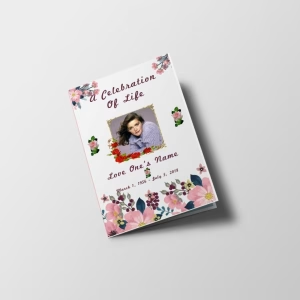
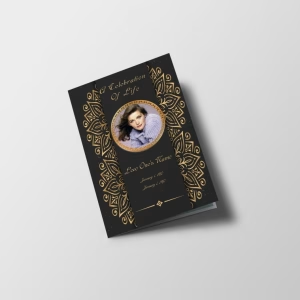
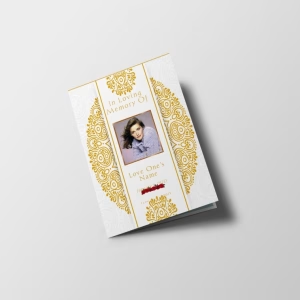
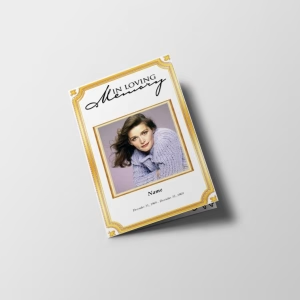
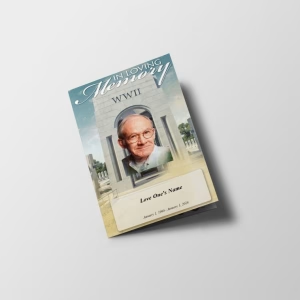
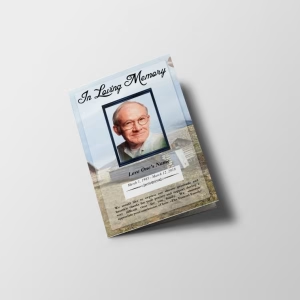
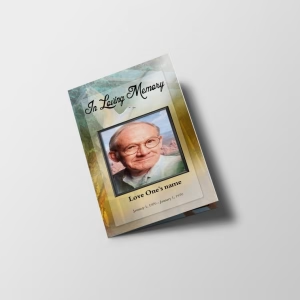
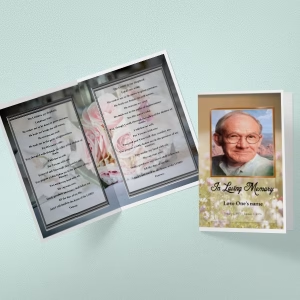
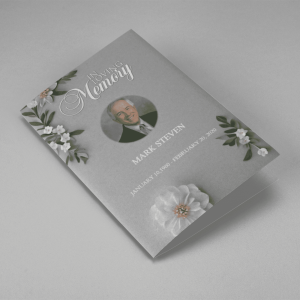
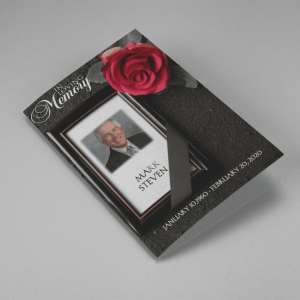
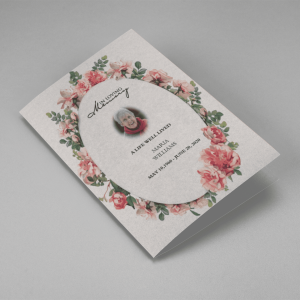
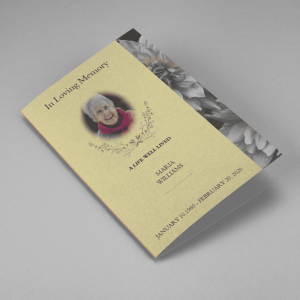
What to include in a funeral program
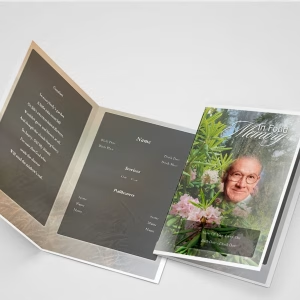
A funeral program, sometimes called a memorial program or order of service, guides guests through the service and can become a keepsake for family and friends. Include only what feels right for your family; not every section is required.
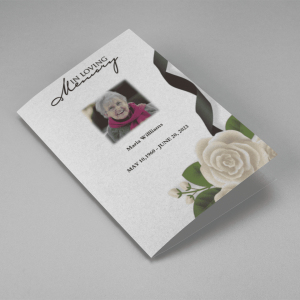
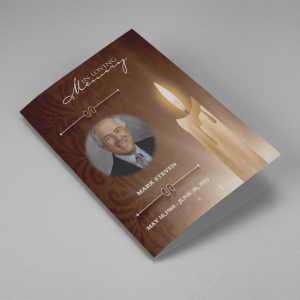
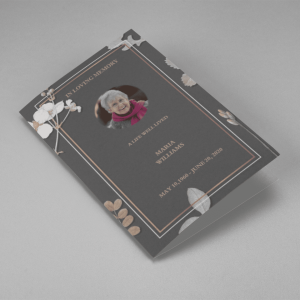
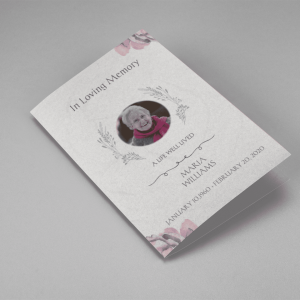
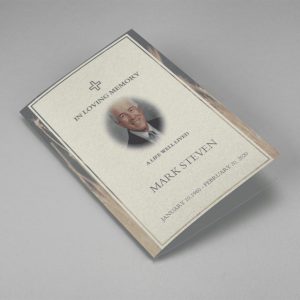
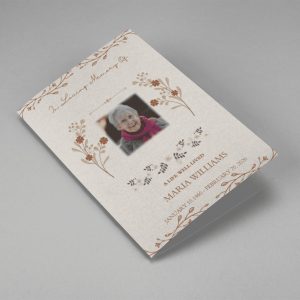
- Cover: A photo, your loved one’s name, and their birth and death dates.
- Service information: The date, time, location, and any relevant funeral home or cemetery details.
- Order of service: The sequence of music, readings, prayers, speakers, eulogies, and closing words.
- Obituary or life tribute: A short biography, favorite memories, accomplishments, interests, or family information.
- Photos: Images that reflect the person’s life, relationships, and personality.
- Poems, scriptures, or readings: Meaningful words chosen by the family or participants.
- Acknowledgments: A note of thanks to those who offered care and support.
- Closing information: A final message, prayer, poem, or details about a gathering after the service.
For further ideas, see these ways to create a memorial after a funeral or life celebration.
How to create a funeral program online
- Gather the essentials. Collect the service details, preferred photo or photos, names of speakers, readings, music selections, and obituary information.
- Choose a format. Consider how much content you need before selecting a layout. Common options include trifold, gatefold, graduated fold, and letter-size programs.
- Start with a template. Use a design that suits the tone of the service, then add your text and images.
- Review the order of service. Confirm names, times, spellings, and the sequence of events with the people involved.
- Share and print when ready. Give close family members an opportunity to review the program, then prepare copies for the service.
If you need a starting point, browse a funeral program resource or explore a funeral program template.
Planning your layout and printing
Choose the size and fold based on the amount of text and the number of photos you plan to include. A simpler layout can make service details and readings easier for guests to follow.
Before printing, check the paper choice, number of copies, and delivery or pickup timing. If you plan to print at home, this guide on printing funeral programs at home may help. You can also review options for a same-day funeral program print service.
Need inspiration for the wording or layout? View an example of a funeral program, find funeral program poems, or explore letter-size obituary templates.
Funeral program examples and ideas
Every program can be different. Some families prefer a simple order of service and a single photo, while others include an obituary, multiple photos, poems, scripture passages, and a longer tribute.
The goal is not to document everything. Choose the details that will help guests participate in the service and remember the person being honored.
Frequently asked questions about funeral programs
What should be included in a funeral program?
Include the person’s name, photo, and birth and death dates, along with the service date, time, and location. Many programs also include an order of service, readings or hymns, an obituary, photos, and acknowledgments.
What is an order of service?
The order of service is the schedule for the memorial or funeral. It may include a welcome, prayers or readings, music, eulogies, and closing words. The exact order can reflect the family’s cultural, religious, or personal preferences.
Who should be listed as survivors?
This is a family decision. Programs often list immediate family members, such as a spouse, children, parents, and siblings. Families may also include grandparents, extended relatives, or close friends who played an important role in the person’s life.
What photos should I use in a funeral program?
Choose photos that feel representative of the person’s life and personality. You might include a favorite portrait, childhood images, photos with family and friends, or images that show meaningful hobbies and interests.
Should a funeral program include religious or spiritual elements?
Include prayers, hymns, scripture, or spiritual readings if they are meaningful to the person or family. For a non-religious service, you may prefer secular readings, poems, music, or personal reflections instead.
Can a funeral program be kept as a memorial?
Yes. In addition to guiding guests through the service, many families keep funeral programs as a reminder of the person’s life and the people who gathered to honor them.
Add a review
Your email address will not be published. Required fields are marked *