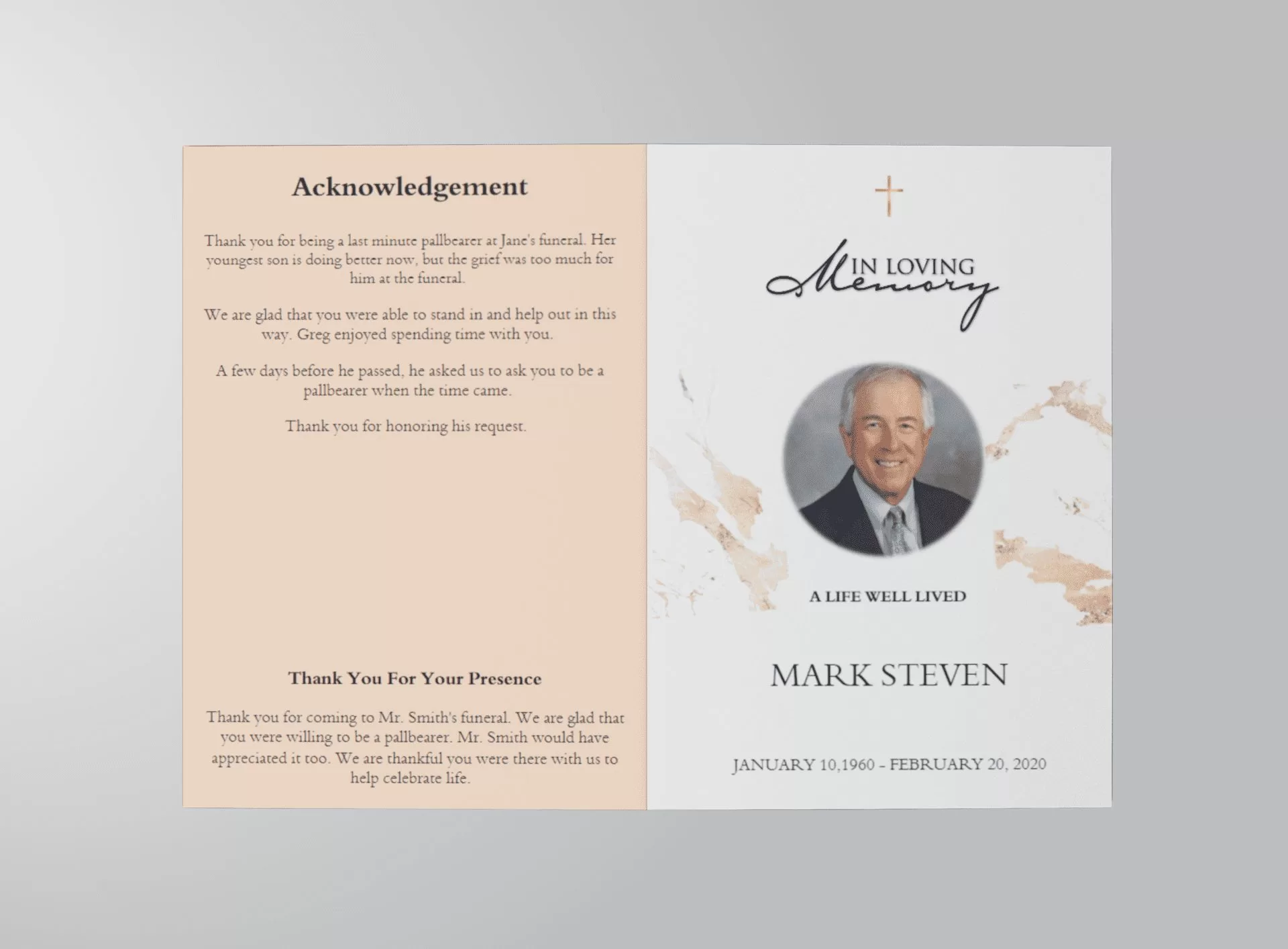
How to Write a Funeral Program Obituary

Navigating Funeral Planning with Compassion and Care

Example of an obituary for a mother template

Understanding the Journey of Funeral Planning

Planning a funeral is a significant responsibility that often falls on family and friends after the passing of a loved one. It can be overwhelming, filled with emotional challenges and difficult decisions. To help you navigate this process with grace and clarity, we’ve compiled essential insights and resources.

Key Aspects of Funeral Planning

  • Choosing the Right Service: Consider the type of service that best honors your loved one, whether it’s a traditional funeral, a memorial service, or a celebration of life.
  • Budgeting: Establishing a budget early on can help guide your decisions. Be open to discussing costs with your chosen funeral home.
  • Personalization: Incorporating personal touches into the service can make it more meaningful. This could include favorite songs, photos, or special readings.

Resources for Support

When faced with the challenges of planning, it can be beneficial to seek support and guidance. Our Essential Guide to Funeral Planning provides insights and support that can make the process smoother.

Finding Comfort in Scripture

For many, turning to scripture can provide comfort during such a difficult time. Our article on New Testament Scripture for a Funeral offers selected verses that can be read during the service or shared with attendees, helping to convey love and hope.

Overcoming Challenges

Every funeral planning journey is unique, and challenges may arise unexpectedly. Our guide on Navigating the Challenges of Funeral Planning discusses common obstacles and how to effectively manage them.

Crafting a Meaningful Tribute

Creating a tribute is an essential part of the funeral process. Whether you wish to prepare a eulogy or gather memories from friends and family, our insights on Crafting a Meaningful Tribute can help in honoring your loved one’s legacy.

Comprehensive Planning Guides

Understanding the intricacies of funeral planning can empower you during this challenging time. Our Understanding Funeral Planning: A Comprehensive Guide is an excellent resource that covers all the necessary steps and considerations.

Essential Insights for Peace of Mind

To further assist you, our article on Essential Insights for Funeral Planning provides practical tips and advice that can ease your planning process and offer peace of mind.


Essential Guide to Funeral Planning: Insights and Support

Example of an obituary for a mother

Understanding Funeral Planning

Planning a funeral can be one of the most challenging tasks you’ll face after the loss of a loved one. The emotional weight can make even the simplest decisions feel overwhelming. However, gaining a better understanding of the process can help ease some of that burden. In this guide, we will explore essential insights into funeral planning, including how to navigate the challenges involved.

Key Elements of Funeral Planning

  • Choosing the Right Service: Consider what type of service would best honor your loved one. Options may include a traditional service, a memorial, or a celebration of life.
  • Understanding Costs: It’s crucial to have a clear understanding of the costs involved. Planning ahead can help avoid unexpected expenses.
  • Personalizing the Tribute: Personal touches can make the service more meaningful. This could involve music selections, photographs, or special readings.

Emotional Support During Funeral Planning

During this difficult time, it’s essential to seek emotional support. Friends, family, or professional counselors can provide the comfort needed to navigate through grief. Additionally, incorporating comforting New Testament scriptures for a funeral can bring solace to those mourning.

Common Challenges in Funeral Planning

Many people face several common challenges when planning a funeral:

  1. Decision Fatigue: The number of decisions to make can be daunting. Consider creating a checklist to streamline the process.
  2. Conflicting Opinions: Family members may have differing opinions on how to honor the deceased. Open communication is vital in these moments.
  3. Time Constraints: Funerals typically need to be arranged quickly, which can add to the stress. Prioritizing tasks can help manage time effectively.

Helpful Resources for Funeral Planning

For those seeking a deeper understanding of funeral planning, resources are readily available:

Crafting Meaningful Tributes

Honoring your loved one with a meaningful tribute can be a healing experience. Take the time to reflect on their life and what made them special. This could involve:

  • Creating a slideshow of cherished memories
  • Incorporating favorite quotes or sayings
  • Sharing stories that highlight their unique character

For additional insights on crafting a tribute, check out our resource on Crafting a Meaningful Tribute.

Final Thoughts on Navigating Funeral Planning

While funeral planning can feel overwhelming, knowing where to seek support and information can make a significant difference. Whether you turn to family, friends, or professional resources like Navigating Funeral Planning with Confidence, remember that you are not alone in this journey. Each step taken is one toward healing and honoring a life well-lived.

sample obituary examples

Navigating the Challenges of Funeral Planning

Example of an obituary for a mother

Understanding Funeral Planning

Planning a funeral can be one of the most challenging tasks you’ll face after the loss of a loved one. The emotional weight can often make the process feel overwhelming. However, having a structured approach can ease the burden significantly. Here are essential insights that can guide you through this difficult time.

1. Start with the Basics

When embarking on funeral planning, there are several key elements you need to consider:

  • Choosing a Funeral Home: Research local funeral homes to find one that meets your needs and budget.
  • Deciding on Burial or Cremation: This decision can impact many other aspects of planning, including costs.
  • Setting a Budget: Establishing a budget upfront can help you make informed choices.

2. Crafting a Meaningful Tribute

Honoring your loved one through a meaningful tribute is crucial. This can be achieved in various ways, including:

  • Creating a personalized tribute that reflects their life and values.
  • Incorporating quotes that resonate with their beliefs and personality.
  • Encouraging family and friends to share memories during the service.

3. Understanding Funeral Options

There are several types of funeral services available, and understanding these can help you make the right choice:

  • Traditional Funeral Service: This typically includes a viewing, a service, and burial or cremation.
  • Memorial Service: A service held without the body present, allowing for a more personalized celebration of life.
  • Graveside Service: A brief service held at the burial site.

4. The Importance of Legal Considerations

Before planning a funeral, it’s essential to address any legal requirements. This may include:

  • Obtaining a death certificate.
  • Understanding any pre-arrangements made by the deceased.
  • Ensuring that funeral wishes are documented and honored.

5. Resources for Planning

Utilizing available resources can greatly simplify the planning process. Consider these options:

  • Consulting an expert guide on funeral planning to understand all your options.
  • Seeking support from bereavement groups or counselors.
  • Leveraging online platforms for planning tools and templates.

6. Emotional Support During Planning

Lastly, don’t underestimate the importance of emotional support during this time. Surround yourself with family and friends who can offer comfort and help you cope with your loss. Remember, it’s okay to seek professional help if you feel overwhelmed.

By following these insights, you can navigate the complexities of funeral planning with greater confidence and ease. For more comprehensive information, check out our essential insights that will help you throughout this challenging journey.

How to Write a Funeral Program Obituary

Understanding Funeral Planning: A Comprehensive Guide

Obituary Example

Understanding Funeral Planning: A Comprehensive Guide

Losing a loved one is an incredibly challenging experience, and planning a funeral can feel overwhelming. However, having a clear understanding of the process can help ease some of that burden. In this post, we will explore important aspects of funeral planning, including crafting meaningful tributes, exploring creative service ideas, and more.

The Importance of Tributes

When it comes to honoring the memory of a loved one, crafting a meaningful tribute is essential. This tribute can take many forms, from eulogies to personalized memorials. Here are some ideas to consider:

  • Personalized Eulogies: Share stories and anecdotes that highlight the unique personality of the deceased.
  • Memory Boards: Display photographs and mementos that celebrate their life and achievements.
  • Guest Contributions: Encourage attendees to share their own memories in a guest book.

Creative Ideas for Funeral Services

Funeral services can be a reflection of the life lived. To make the service meaningful, consider incorporating some creative ideas:

  • Themed Services: Choose a theme that reflects the interests of the deceased, such as a favorite hobby or passion.
  • Music Selection: Include songs that were meaningful to the individual or that evoke cherished memories.
  • Interactive Elements: Create opportunities for guests to participate, such as sharing stories or lighting candles.

Funeral Programs and Templates

Having a well-organized funeral program can help guide attendees through the service and honor the deceased’s memory. Explore our funeral program template to find tips and examples to assist in creating a meaningful program. A structured program often includes:

  • Order of the service
  • Biographical information
  • Special messages or acknowledgments

Additional Resources

For those navigating the complexities of funeral planning, our complete guide offers a wealth of information on everything from memorials to obituaries. This resource can help you make informed decisions during a difficult time.

Furthermore, for those looking for inspiration, check out our uplifting funeral quotes. These quotes can add a heartfelt touch to tributes or programs, providing comfort to grieving families and friends.

In summary, understanding the elements of funeral planning can significantly ease the stress of this process. From meaningful tributes to creative service ideas, each component plays a vital role in honoring the memory of your loved one.

sample obituary examples

Essential Insights for Funeral Planning

Example of an obituary for a mother template

Understanding Funeral Planning

Planning a funeral can be an overwhelming task, often compounded by the emotional toll of losing a loved one. Having a comprehensive understanding of the process can help ease some of this burden. At QuickFuneral.com, we aim to provide resources that can guide you through each step of this challenging time.

Key Aspects of Funeral Planning

  • Choosing the Right Type of Service: Consider whether a traditional burial, cremation, or memorial service best honors your loved one.
  • Setting a Budget: Understanding the financial aspects is crucial. For insights on this, visit our article on the cost of the average funeral.
  • Crafting a Meaningful Tribute: Personalizing the service can help in celebrating the life of your loved one. Our guide on crafting a meaningful tribute offers valuable insights.
  • Choosing a Funeral Home: Researching local options and reading reviews can help find a suitable funeral home that meets your needs.

Navigating the Emotional Journey

As you embark on this journey, it’s essential to acknowledge the emotional aspects that accompany funeral planning. The grief you experience is valid, and navigating this emotional landscape can significantly affect your planning process. Our article on navigating the emotional journey of funeral planning provides tips on managing these feelings.

Practical Steps for Planning

Here are some practical steps to consider as you plan a funeral:

  1. Gather Necessary Documents: This includes the death certificate, insurance papers, and any pre-arrangement documents.
  2. Communicate with Family: Open discussions with family members can help ensure everyone’s wishes are considered.
  3. Decide on Logistics: From the venue to the guest list, coordinating details is vital for a smooth service.
  4. Consider Memorial Options: Explore different options for memorialization, such as online tributes or setting up memorial funds.

Resources for Funeral Planning

For those looking for more comprehensive guidance, we recommend reading our essential guide to funeral planning. This resource covers everything from the basics to more detailed considerations, ensuring you have the information necessary to make informed decisions.

Remember, the planning process is unique to each individual and their circumstances. While it’s important to stay organized and informed, it’s equally essential to allow yourself the space to grieve and to reach out for support whenever needed. You are not alone on this journey.

Final Thoughts

Funeral planning is a deeply personal experience. By understanding the key components and allowing yourself to navigate the emotional challenges, you can honor your loved one in a way that feels right for you. For more detailed insights, check out our comprehensive guide on understanding funeral planning.

fall card

Crafting a Meaningful Tribute: Insights for Funeral Planning

Obituary Template

Understanding the Importance of Tributes

When we lose a loved one, crafting a meaningful tribute is essential in honoring their memory. Whether through a heartfelt speech, an obituary, or a memorial service, these tributes help us celebrate lives well-lived. Below are some aspects to consider when planning a tribute.

Types of Tributes You Can Create

  • Funeral Speeches: Delivering a funeral speech can be an emotional yet cathartic experience. You can find heartfelt funeral speech quotes that resonate with your feelings and offer comfort to others.
  • Eulogies: Writing a eulogy is one of the most significant ways to honor a loved one. You can explore eulogy examples that capture the essence of their life.
  • Obituaries: An obituary serves as a public acknowledgment of a person’s life. Consider using our obituary template for guidance on what to include.

Quotes That Inspire

Integrating quotes into your tribute can add depth and emotion. Here are some categories to consider:

  • Memorial Quotes: These quotes are perfect for memorial events and can encapsulate your feelings. Check out our collection of memorial quotes that resonate with many.
  • In Memory Quotes: When sending sympathy cards, including an in memory quote can provide comfort to those grieving.
  • Eulogy Quotes: Enhance your eulogy by including impactful quotes. Visit our page on eulogy quotes for inspiration.

Planning the Perfect Service

The logistics of a funeral can be overwhelming. Here are some tips to ensure your service goes smoothly:

  1. Choose a Location: Decide whether the service will take place at a funeral home, church, or another venue.
  2. Prepare a Guest List: Consider who you would like to invite to share in the remembrance.
  3. Personalize the Service: Include elements that reflect the personality and passions of the deceased. This could be music they loved or readings that were meaningful to them.

Emotional Support During Planning

Don’t hesitate to reach out for support during this challenging time. Friends, family, and professional counselors can provide the comfort you need. Remember that everyone grieves differently, and it’s okay to seek help.

Final Thoughts

Creating a meaningful tribute is not just about saying goodbye; it’s a way to celebrate a life that touched many. Take your time in planning, and allow your emotions to guide you in honoring your loved one’s legacy.

Sample Obituary Templates

Navigating Funeral Planning with Confidence

Example of an obituary for a mother template

Understanding the Importance of Funeral Planning

Planning a funeral can often feel overwhelming, especially during a time of grief. However, having a clear understanding of the process can significantly ease the burden. A well-structured plan allows family members and friends to focus on celebrating the life of their loved one rather than getting caught up in logistical details.

Key Steps in the Funeral Planning Process

  • Gather Information: Collect all necessary documents and personal information about the deceased.
  • Choose a Funeral Home: Research and select a funeral home that meets your needs. Consider reading our Essential Guide to Funeral Planning for tips on what to look for.
  • Select a Service Type: Decide whether to have a traditional service, cremation, or another type of memorial.
  • Create a Budget: Establish a budget to ensure that all expenses are manageable.
  • Personalize the Service: Consider ways to make the service unique, such as incorporating favorite songs, readings, or even special flowers.

Emotional Considerations

During this difficult time, it’s important to acknowledge the emotional journey you and your family will experience. Grief can manifest in many ways, and understanding this can help navigate through the planning process. Our article on Navigating the Emotional Journey of Funeral Planning offers insights and support to help you cope with your feelings.

Choosing Meaningful Tributes

Flowers and other tributes play a significant role in memorial services. They symbolize love, compassion, and respect. If you’re unsure about which flowers to choose, check out our guide on Choosing the Perfect Flowers for a Memorial Service for helpful suggestions.

Comprehensive Resources for Funeral Planning

Understanding funeral planning in its entirety is crucial. Our Understanding Funeral Planning: A Comprehensive Guide provides detailed insights into every step of the process, ensuring you feel informed and confident as you proceed.

By preparing ahead of time and using available resources, you can create a meaningful farewell that honors your loved one’s life while also supporting your emotional needs during this challenging period.

Final Thoughts

Recognizing the significance of each aspect of the funeral planning process can lead to a more fulfilling experience. Remember, you are not alone. Utilize resources like our Essential Insights for Funeral Planning to guide you through this journey.

How to Write a Funeral Program Obituary

Essential Guide to Funeral Planning

Example of an obituary for a mother template

Understanding Funeral Planning

Planning a funeral can be a daunting task, especially during such an emotional time. It’s important to approach this process with care and understanding. In this guide, we will explore the essential aspects of funeral planning, including the emotional journey involved, practical steps to take, and how to honor your loved one effectively.

The Emotional Journey of Funeral Planning

When faced with the loss of a loved one, emotions can run high. It’s crucial to recognize that grieving is a personal journey. Here are some coping strategies to help navigate this challenging time:

  • Allow Yourself to Grieve: Give yourself permission to feel the range of emotions that come with loss.
  • Seek Support: Connect with family, friends, or support groups who can provide comfort.
  • Consider Professional Help: A counselor can help you process your emotions in a healthy way.

Practical Steps in Funeral Planning

Understanding the logistics of funeral planning can make the process smoother. Here are key steps to consider:

  1. Choose a Funeral Home: Research local funeral homes and their services. You can find a comprehensive guide to help you with this process in our article on Understanding Funeral Planning.
  2. Decide on the Type of Service: Whether it’s a traditional service, a memorial, or a celebration of life, discuss with family how to honor your loved one.
  3. Plan the Details: This includes selecting music, readings, and speakers. Music can play a significant role in creating the right atmosphere. Explore our list of Top Pop Funeral Songs to Honor Your Loved One for inspiration.
  4. Handle Legalities: Make sure you have all necessary documentation, including death certificates and burial permits, in order. Our guide on Navigating the Complexities of Funeral Planning can help you understand these requirements.

Honoring Your Loved One

Every individual is unique, and their funeral should reflect their personality and values. Here are some ideas to consider:

  • Personalized Tributes: Create a memory table with photos and mementos that tell their story.
  • Special Readings: Choose passages or poems that resonate with your loved one’s life.
  • Memorial Donations: Suggest donations to a charity that was meaningful to them in lieu of flowers.

Additional Resources

For a deeper understanding of the emotional aspects of funeral planning, visit our article on Navigating the Emotional Journey of Funeral Planning. It provides insights and tips to help manage the emotional challenges you may encounter.

By taking the time to plan thoughtfully and with care, you can create a meaningful farewell that honors your loved one’s memory. Remember, you are not alone in this journey, and there are resources available to support you every step of the way.

Top Free Funeral Program Templates for Every Service Style

Understanding Funeral Planning: A Comprehensive Guide

Obituary Template

What is Funeral Planning?

Funeral planning can often feel daunting, especially during a time of grief. Understanding the definition of a funeral is crucial. It’s a ceremony that honors and remembers a deceased person, providing an opportunity for family and friends to come together, share memories, and celebrate the life of their loved one.

Why is Funeral Planning Important?

When you lose someone dear, the emotional burden can be overwhelming. Planning a funeral allows you to focus on honoring their memory while managing the practical aspects of saying goodbye. This can help ease some of the stress during such a difficult time. For more insight, explore our guide on navigating the complexities of funeral planning.

Steps to Effective Funeral Planning

  1. Gather Information: Collect necessary details about the deceased, including their wishes, if known.
  2. Choose a Funeral Home: Research local funeral homes and consider factors such as services offered and costs.
  3. Plan the Ceremony: Decide on the type of service, including speakers, music, and any personal touches.
  4. Consider Logistics: Arrange for transportation, burial or cremation, and other essential logistics.

Navigating the Emotional Journey of Funeral Planning

Funeral planning is not just about logistics; it’s also an emotional journey. It’s important to acknowledge and embrace your feelings during this time. For support in coping with these emotions, our article on navigating the emotional journey of funeral planning can provide useful insights.

Helpful Resources for Funeral Planning

To guide you through the process, here are some valuable resources:

Conclusion

While this guide provides a solid foundation for understanding funeral planning, remember that it’s okay to seek help from professionals and loved ones. Each step taken is a step toward honoring a cherished memory.

Navigating the Emotional Journey of Funeral Planning

Obituary Template Example

Navigating the Emotional Journey of Funeral Planning

When faced with the loss of a loved one, the overwhelming emotional toll can make the process of funeral planning seem daunting. Understanding the logistics involved can help alleviate some of this burden.

Understanding the Purpose of Funeral Planning

Funeral planning is not just about the event itself; it’s a chance to honor and celebrate the life of someone we cherish. Here are some key aspects to consider:

  • Celebration of Life: A funeral service allows family and friends to come together, share memories, and celebrate the individual’s life.
  • Closure: It provides an opportunity for loved ones to say their goodbyes and find closure in their grief.
  • Legacy: Planning a funeral is a way to ensure that the deceased’s wishes are honored and their legacy is remembered.

Steps to Effective Funeral Planning

While the process can be emotionally taxing, breaking it down into manageable steps can help. Here are some actionable steps to consider:

  1. Discuss with Family: Involve family members in the planning process to ensure everyone’s wishes and feelings are respected.
  2. Select a Funeral Home: Research local funeral homes and consider their services, reputation, and pricing. You can find out more about this in our guide on navigating the journey of funeral planning.
  3. Choose a Service Type: Decide whether to have a traditional funeral, memorial service, or celebration of life, taking into account the preferences of the deceased.
  4. Plan the Details: Consider the location, officiant, music, readings, and any other personal touches that can reflect the deceased’s personality.
  5. Budgeting: Establish a budget early on to avoid unexpected expenses. For a comprehensive overview, check out Understanding Funeral Planning.

Emotional Support During Planning

Funeral planning can stir up a whirlwind of emotions. Here are some resources and strategies to help cope:

  • Lean on Support Networks: Don’t hesitate to reach out to friends, family, or support groups who can provide emotional support.
  • Professional Help: Consider seeking guidance from a funeral director or counselor specializing in grief support.
  • Take Breaks: It’s crucial to take time for yourself during this process. Engage in activities that help you relax and recharge.

Personalizing the Funeral Experience

Every individual deserves a unique farewell. Here are ways to personalize the service:

  • Memory Boards: Create a memory board showcasing photographs and mementos that represent the deceased’s life.
  • Favorite Music: Incorporate the deceased’s favorite songs into the service.
  • Shared Stories: Encourage attendees to share their favorite memories or stories during the service.

For a deeper understanding of how to approach the planning process, visit our page on essential insights for funeral planning.

Planning a funeral can be a complex journey filled with emotional challenges, but it is also an opportunity to celebrate a life well-lived. By approaching the process thoughtfully and compassionately, you can create a meaningful tribute that honors your loved one.

Back to Top
Product has been added to your cart
Compare (0)