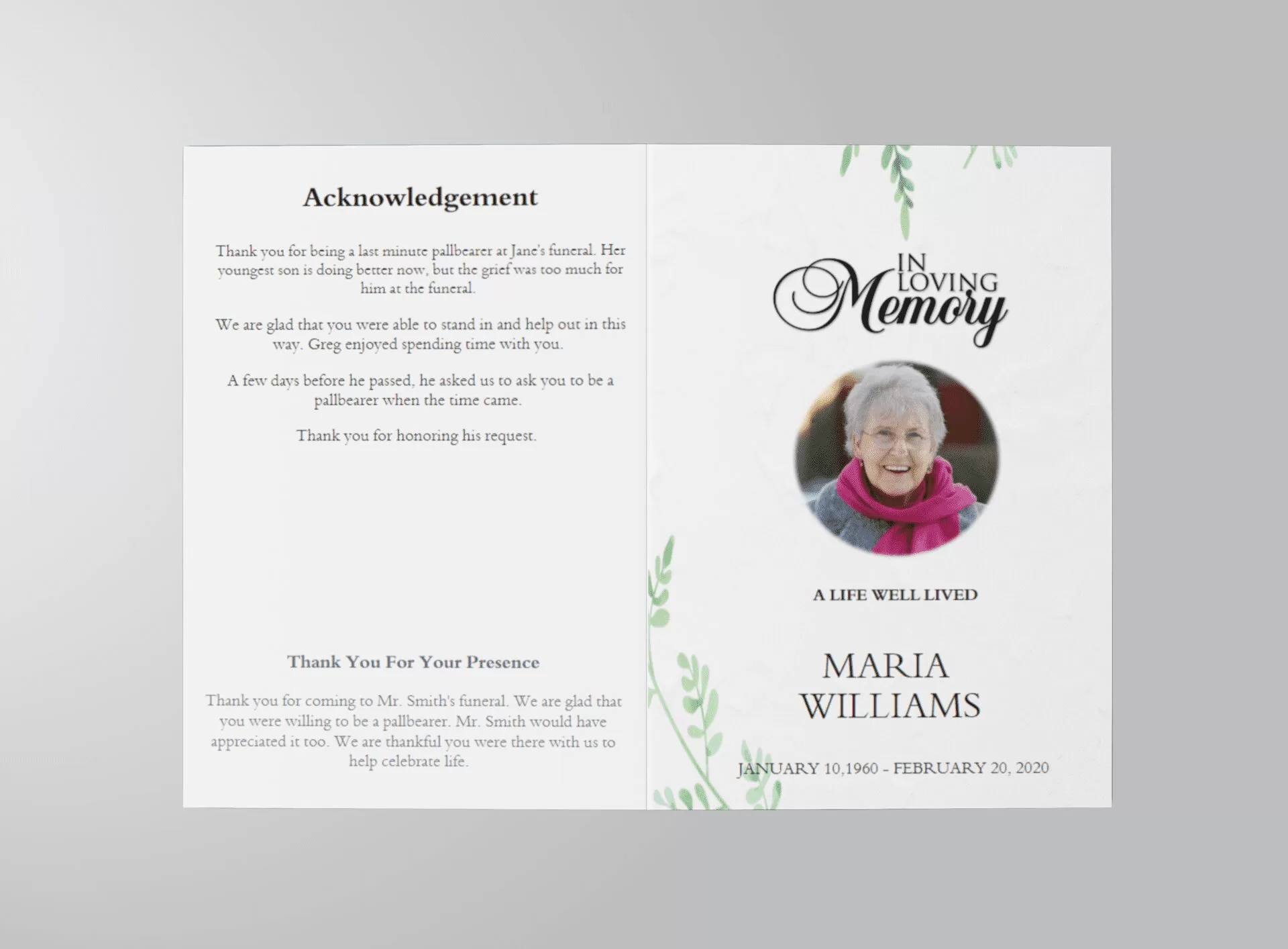
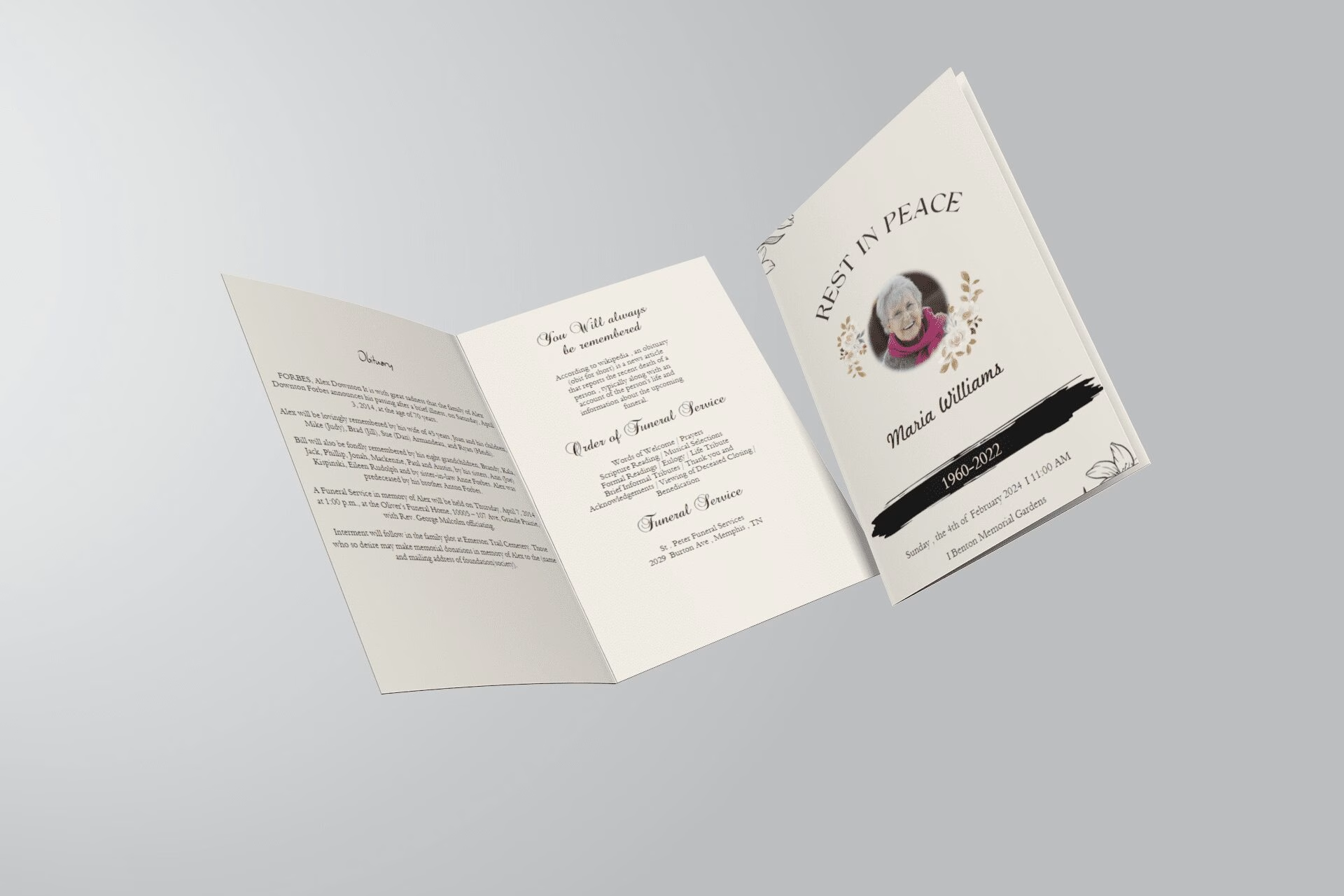
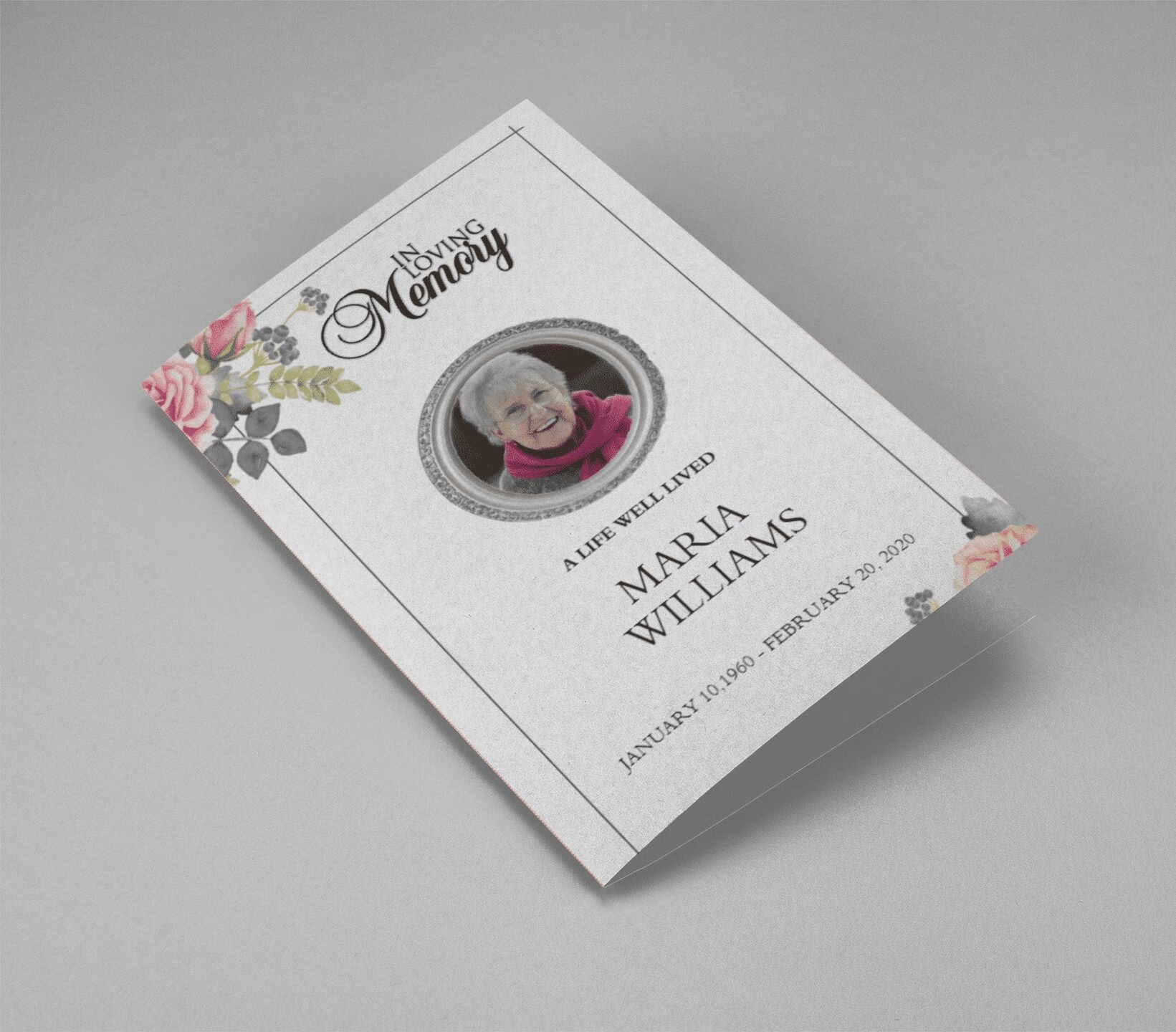
Catholic Funeral Program Example PDF (Free Editable Template)

Navigating the Journey of Funeral Planning

Example of an obituary for a mother

Understanding the Emotional Landscape

Losing a loved one is an emotional journey that can feel overwhelming. The process of planning a funeral requires not only logistical considerations but also emotional support and compassion. It’s vital to approach this sensitive time with understanding, ensuring that the wishes of the deceased and the needs of the family are prioritized.

Essential Steps for Funeral Planning

When faced with the responsibility of planning a funeral, it’s beneficial to break the process down into manageable steps. Here are some key elements to consider:

  • Choosing the Right Funeral Service: Whether you opt for a traditional service or a more personalized celebration of life, selecting the right format is crucial. For guidance, check out our article on essential resources for funeral planning.
  • Selecting the Perfect Funeral Hymns: Music plays a significant role in honoring the deceased. Our guide on choosing the perfect funeral hymns can help you select melodies that resonate with your loved one’s memory.
  • Setting a Budget: Funeral costs can vary widely. It’s important to establish a budget early on. Consider exploring our supportive guide for tips on managing your finances during this time.
  • Gathering Necessary Documentation: Ensure you have all required documents, such as death certificates and insurance policies, ready for the planning process.

Support Resources Available

During this challenging time, it’s essential to seek support. Many organizations and services provide assistance to families navigating the complexities of funeral planning. Our guide to funeral planning essentials offers insights into available resources and support networks.

Personalizing the Funeral Experience

Every life is unique, and so should be the way we celebrate it. Personalization can take many forms:

  • Incorporating favorite photos and memorabilia
  • Including personal stories and tributes in the service
  • Choosing a meaningful location for the service

These elements help create a memorable experience for attendees and honor the life of the deceased.

Understanding Funeral Etiquette

Attending a funeral can be emotionally challenging, and understanding the etiquette involved can ease some of the stress. Always remember to:

  • Offer condolences to the family
  • Dress appropriately for the occasion
  • Respect the wishes of the family regarding any rituals or customs

To delve deeper into etiquette and expectations, you might find our resource on navigating funeral planning particularly helpful.

Final Thoughts on Funeral Planning

While the process of planning a funeral can be overwhelming, taking it step by step can make it more manageable. Remember, you are not alone in this journey, and there are numerous resources available to support you. Whether it’s understanding the logistics or finding ways to personalize the service, each step is an opportunity to honor a cherished life.

Sample Obituary Templates

Understanding Funeral Planning: A Comprehensive Guide

Example of an obituary for a mother template

Introduction to Funeral Planning

Funeral planning can be one of the most challenging tasks you face when a loved one passes away. The emotional toll can be overwhelming, and the logistics of arranging a funeral can add to that stress. Understanding the essentials of funeral planning is crucial to ease this burden. In this guide, we will walk you through the key aspects of funeral planning, offering insights into how to navigate this complex journey.

Key Aspects of Funeral Planning

  • Emotional Preparation: Recognizing the emotional challenges is the first step. Planning a funeral requires navigating grief while making important decisions. For support on this journey, see our article on navigating the emotional aspects of funeral planning.
  • Understanding Funeral Etiquette: Funerals often involve specific cultural and social norms. For instance, you might wonder, why do people wear sunglasses at funerals? This can provide insight into acceptable attire and behavior during these solemn occasions.
  • Logistical Considerations: From selecting a location to organizing transportation, the logistics can feel daunting. Our understanding the essentials of funeral planning guide outlines these crucial details.
  • Choosing the Right Service: Different types of services cater to various needs and preferences. Whether you opt for a traditional burial, cremation, or a memorial service, understanding your options is vital. Explore our essential guide to compassionate funeral planning for more information.

Steps to Plan a Meaningful Funeral

  1. Gather Information: Collect all necessary documentation and understand the deceased’s wishes, if known.
  2. Select a Funeral Home: Research local funeral homes and their services. Consider reviews and recommendations.
  3. Decide on a Budget: Determine how much you can spend on the funeral and related expenses.
  4. Plan the Details: Choose elements such as music, readings, and speakers. Personal touches can make the service more memorable.
  5. Communicate with Family: Involve family members in the planning process to ensure that everyone’s wishes are considered.

Additional Resources

For those seeking further assistance, our article on navigating funeral planning offers a compassionate approach to this challenging experience.

Remember, you’re not alone in this journey. Many families face similar challenges, and there are resources available to support you. Planning a funeral with care and consideration can honor your loved one’s memory beautifully.

Top Free Funeral Program Templates for Every Service Style

Navigating the Emotional Landscape of Funeral Planning

Obituary Template

Navigating the Emotional Landscape of Funeral Planning

Funeral planning is an essential yet often daunting task, especially during times of grief. It involves making numerous decisions that can feel overwhelming. However, understanding the various aspects of funeral planning can help ease the burden. In this guide, we’ll explore crucial components, including dress codes, planning essentials, and helpful insights.

Understanding Funeral Dress Code for Ladies

Choosing the right attire for a funeral is a significant part of showing respect for the deceased and their family. The funeral dress code for ladies typically leans towards conservative and subdued colors. Here are some guidelines to consider:

  • Color Choices: Black is traditional, but navy, gray, and dark earth tones are also acceptable.
  • Style: Modesty is key; opt for dresses or skirts that fall below the knee.
  • Accessories: Keep jewelry minimal and avoid flashy pieces that may draw attention.

Essential Guide to Funeral Planning

Planning a funeral requires careful thought and consideration. Our Essential Guide to Funeral Planning provides a comprehensive overview, helping families navigate through their grief with care. Key aspects to focus on include:

  • Choosing a Funeral Home: Research local establishments and read reviews to find a compassionate provider.
  • Service Details: Decide between a traditional service, memorial, or celebration of life.
  • Budgeting: Be aware of costs and plan accordingly; transparency is crucial.

Insights into Funeral Planning

It’s essential to gather insights into funeral planning to make informed decisions. Here are some points to consider:

  • Personal Touches: Include elements that reflect the deceased’s personality, such as favorite songs or photographs.
  • Guest Considerations: Think about the comfort of attendees; ensure the venue is accessible.
  • Follow-up: Consider sending thank-you notes after the service to acknowledge support.

A Comprehensive Approach to Funeral Planning

For a thorough understanding, our Comprehensive Guide to Funeral Planning offers in-depth information on the entire process. Here are some takeaways:

  • Pre-Planning Options: Discuss pre-planning with family members to ease decision-making later on.
  • Legal Considerations: Be aware of necessary paperwork and legal obligations.
  • Community Resources: Utilize local support groups or counselors for emotional assistance.

Conclusion

While this post does not include a conclusion, we hope this information on funeral planning has provided clarity and support during a difficult time. Remember, seeking help is a sign of strength, and resources are available to assist you through this journey.

How to Address, Sign, and Write Funeral Thank You Cards

Losing a loved one is one of life’s most difficult experiences. During this emotional time, many people want to show gratitude to those who offer their support. Writing funeral thank you cards is a thoughtful way to express appreciation for the kindness and generosity extended to the family during a time of loss. In this comprehensive guide, we’ll cover the essentials of how to address funeral thank you cards, how to sign funeral thank you notes, how long to send funeral thank you cards, and much more.

How to Address Funeral Thank You Cards

Writing funeral thank you cards is a meaningful way to show appreciation for those who supported you during the mourning process. Knowing how to address funeral thank you cards properly ensures the card is respectful and appropriate. When addressing the cards, it’s essential to include the recipient’s full name or their family name. This will personalize the note and demonstrate genuine appreciation.

To dive deeper into how to address these cards effectively, check out this detailed guide on How to Address Funeral Thank You Cards.

When addressing a funeral thank you card, the main factors to consider include:

  1. Proper Titles and Formality: Address each recipient with the correct title (e.g., Mr., Mrs., Dr.) followed by their full name. If you are unsure of the recipient’s title, it’s always best to use a more formal salutation.

  2. Personalizing the Greeting: In many cases, a personal message or specific acknowledgment of the person’s help can make the thank you note more meaningful.

  3. Family Members: When addressing a family for their collective support, you can use the family name (e.g., “The Johnson Family”).

To learn more details on the correct way to address these cards, you can refer to additional helpful resources such as How to Address Funeral Thank You Cards and How to Address Funeral Thank You Cards.

How to Sign Funeral Thank You Notes

After addressing the cards, the next important aspect is learning how to sign funeral thank you notes. This can sometimes feel challenging, especially during a period of grief. The signature is the final personal touch to the card and should convey your gratitude while remaining respectful.

Tips for Signing Funeral Thank You Notes:

  1. Personalize the Signature: Always sign the thank you note with your full name, and consider including your relationship to the deceased (e.g., “With gratitude, John Smith, nephew of James Smith”).

  2. Use Appropriate Closings: Common closings for funeral thank you notes include “Sincerely,” “With heartfelt thanks,” or simply “Thank you.”

  3. Family Signatures: If multiple family members are involved, each person can sign individually or add a family name (e.g., “The Williams Family”).

Learn more about the proper way to sign these notes by reading How to Sign Funeral Thank You Notes and How to Sign Funeral Thank You Notes.

How Long to Send Funeral Thank You Cards

Timing is another critical aspect when it comes to funeral thank you cards. Ideally, these cards should be sent within a reasonable time after the funeral. While it may be difficult to think about this immediately, it’s important to acknowledge the support you received in a timely manner.

So, how long to send funeral thank you cards? The general guideline is to send them within 2-3 weeks of the funeral service. However, you can extend this time frame to a few months if necessary, especially if there were extenuating circumstances.

For more details on the time frame for sending funeral thank you cards, check out How Long to Send Funeral Thank You Cards, How Long to Send Funeral Thank You Cards, and How Long to Send Funeral Thank You Cards.

How Long to Write Funeral Thank You Notes

Writing funeral thank you notes can be time-consuming, and often, it’s something that is delayed due to the grieving process. It’s natural to feel overwhelmed, but it’s important to set aside time to do this.

Typically, how long to write funeral thank you notes will depend on the number of people you need to thank. For a manageable approach, consider writing a few notes each day. This allows you to pace yourself and prevent burnout.

To read more about when and how long it should take to write thank you notes, visit How Long to Write Funeral Thank You Notes and How Long to Write Funeral Thank You Notes.

What is the Function After a Funeral Called?

Once the funeral service has concluded, there’s often a gathering or meal that follows. This is an important time for family and friends to come together, reminisce, and offer continued support. But what is the function after a funeral called?

This gathering is commonly referred to as a reception or a wake, depending on cultural traditions. It allows attendees to share memories of the deceased and offer comfort to the grieving family.

Learn more about this tradition and its significance in the post-funeral process by visiting What is the Function After a Funeral Called and What is the Function After a Funeral Called.

What to Put in Thank You Cards for Funeral

Now, let’s talk about what to put in thank you cards for funeral. The content of your card should reflect your sincere gratitude and highlight specific acts of kindness. A well-written thank you card can bring comfort to those who supported you.

Here’s a simple outline for writing a heartfelt funeral thank you card:

  1. Acknowledge the Gift or Gesture: Whether it was attending the funeral, providing food, or sending flowers, mention the act specifically.

  2. Personalize the Note: Add a personal anecdote or mention how much the gesture meant to you.

  3. Close with Gratitude: Finish with a heartfelt “thank you” and any additional words of appreciation.

For more guidance on the right content for funeral thank you cards, read What to Put in Thank You Cards for Funeral and What to Put in Thank You Cards for Funeral.

Thank You Card for Funeral Officiant

The officiant plays a pivotal role in guiding the ceremony and offering comfort to the grieving family. When crafting a thank you card for funeral officiant, it’s important to express your gratitude for their words and guidance.

A sample message might include: “Thank you for your thoughtful and comforting words during the ceremony. Your presence was a great comfort to our family during this difficult time.”

To see more about how to address and write a thank you card for a funeral officiant, visit Thank You Card for Funeral Officiant.

Thank You Card for Funeral Pastor

A thank you card for funeral pastor serves the same purpose as a thank you card for an officiant, but with more personalized religious undertones. Thanking the pastor for their support, spiritual guidance, and prayerful services is crucial.

Consider using messages such as: “We are grateful for your prayers and the comfort you provided to our family through your message of hope and peace.”

To read more, click on Thank You Card for Funeral Pastor.

Thank You Card for Funeral Mass

If a mass was held in honor of the deceased, a thank you card for funeral mass should reflect your gratitude for the congregation’s participation and support.

A simple yet sincere message may include: “We truly appreciate the love and support shown during the funeral mass. Your presence brought peace to our hearts.”

Learn more on how to write a thank you card for the funeral mass by visiting Thank You Card for Funeral Mass.

What to Write in Thank You Card for Funeral Food

Often, people provide food during or after a funeral. Writing what to write in thank you card for funeral food can be tricky, but a simple note of appreciation will be appreciated. “Thank you for your thoughtful gesture and the delicious food you provided during this time of mourning.”

For more details, refer to What to Write in Thank You Card for Funeral Food.

Eulogy Examples: Honoring and Celebrating a Loved One’s Life

Writing a eulogy is one of the most significant ways to honor and celebrate the life of a loved one who has passed away. It provides an opportunity to reflect on their journey, share cherished memories, and highlight the impact they had on the lives of others. Crafting a heartfelt and meaningful eulogy can be challenging, but with some guidance and eulogy examples, you can create a tribute that truly captures the essence of your loved one.

Understanding the Purpose of a Eulogy

A eulogy serves multiple purposes:

  • Reflection: It allows you to reflect on the life of the deceased, celebrating their achievements, personality, and the love they shared with others.
  • Connection: By sharing stories and memories, you connect with the audience, offering comfort and a sense of unity during a time of loss.
  • Legacy: A eulogy helps preserve the legacy of the deceased, ensuring their memory lives on through the words and stories you share.

Structure of a Eulogy

While there is no strict format for a eulogy, a common structure includes:

  1. Introduction: Start with an introduction that sets the tone. Mention your relationship with the deceased and express gratitude for the opportunity to speak.
  2. Personal Anecdotes: Share personal stories and memories that highlight the deceased’s character, values, and impact. Focus on positive and uplifting experiences.
  3. Achievements and Legacy: Talk about the significant achievements and contributions of the deceased. This could include their professional accomplishments, community involvement, or personal passions.
  4. Closing: Conclude with a heartfelt message, a favorite quote or poem, and a final farewell.

Eulogy Example for a Parent

Introduction: “Good afternoon, everyone. My name is [Your Name], and I am honored to stand before you today to celebrate the life of my father, [Father’s Name]. It’s incredibly difficult to sum up a lifetime of love, wisdom, and guidance in just a few words, but I hope to share some of the wonderful memories and lessons he imparted to us.”

Personal Anecdotes: “My father was a man of great integrity and kindness. I remember the countless weekends we spent fishing together. Those trips weren’t just about catching fish; they were about bonding, learning, and sharing stories. Dad always had a way of turning a simple outing into a grand adventure. His laughter was infectious, and he had a knack for making everyone around him feel special and loved.”

Achievements and Legacy: “Dad was not just a pillar in our family but also in our community. As a teacher for over 30 years, he inspired countless students, instilling in them a love for learning and the confidence to pursue their dreams. His legacy lives on in the success and happiness of those he taught and mentored.”

Closing: “As we say goodbye to my father, let us remember his unwavering love and the joy he brought into our lives. One of his favorite quotes was, ‘The measure of a man is not in the wealth he leaves behind, but in the lives he touches.’ By that measure, Dad was truly a rich man. Rest in peace, Dad. We will carry your memory in our hearts forever.”

Eulogy Example for a Friend

Introduction: “Hello, everyone. My name is [Your Name], and I had the privilege of being best friends with [Friend’s Name] for over 20 years. Today, I want to share some of the incredible memories and the lasting impact [Friend’s Name] had on my life and the lives of so many others.”

Personal Anecdotes: “[Friend’s Name] was the kind of person who could light up a room with just a smile. I’ll never forget our spontaneous road trips, where we’d drive for hours, singing along to our favorite songs and talking about our dreams and aspirations. [Friend’s Name] had a unique ability to make every moment feel special and meaningful.”

Achievements and Legacy: “Throughout [Friend’s Name]’s life, they accomplished so much. As a talented artist, their work was not only beautiful but also thought-provoking, touching the hearts of many. [Friend’s Name] was also deeply involved in charitable work, dedicating time and resources to causes they believed in.”

Closing: “Though [Friend’s Name] is no longer with us, their spirit and legacy will live on in the stories we share and the memories we cherish. As we bid farewell, let us remember [Friend’s Name]’s kindness, creativity, and the love they spread wherever they went. Rest in peace, dear friend. You will be forever missed.”

Tips for Writing a Eulogy

  • Be Authentic: Speak from the heart and be true to your feelings. Authenticity resonates more than trying to be overly formal or poetic.
  • Practice: Rehearse your eulogy several times to feel comfortable and confident. It’s okay to have notes or a written copy to refer to.
  • Take Breaks: If you become emotional while delivering the eulogy, it’s perfectly fine to pause and take a moment. The audience will understand.

Writing and delivering a eulogy is a profound way to honor a loved one’s life and legacy. By sharing personal stories, highlighting their achievements, and expressing your heartfelt emotions, you can create a tribute that celebrates their unique journey and the impact they had on those around them. Remember, the most important aspect of a eulogy is the love and respect it conveys.

For more guidance on writing eulogies and other funeral-related resources, visit [Your Website Name]. We are here to support you during this difficult time.

Back to Top
Product has been added to your cart
Compare (0)